Learn why your cactus is turning brown, including sunburn, overwatering, underwatering, root rot, pests, corking, and simple ways to fix brown cactus spots.
Why Is My Cactus Turning Brown?
A cactus turning brown can be worrying, especially if you are not sure whether the plant is drying out, rotting, or simply aging. Brown spots on a cactus can happen for several reasons, and not all of them mean the cactus is dying.
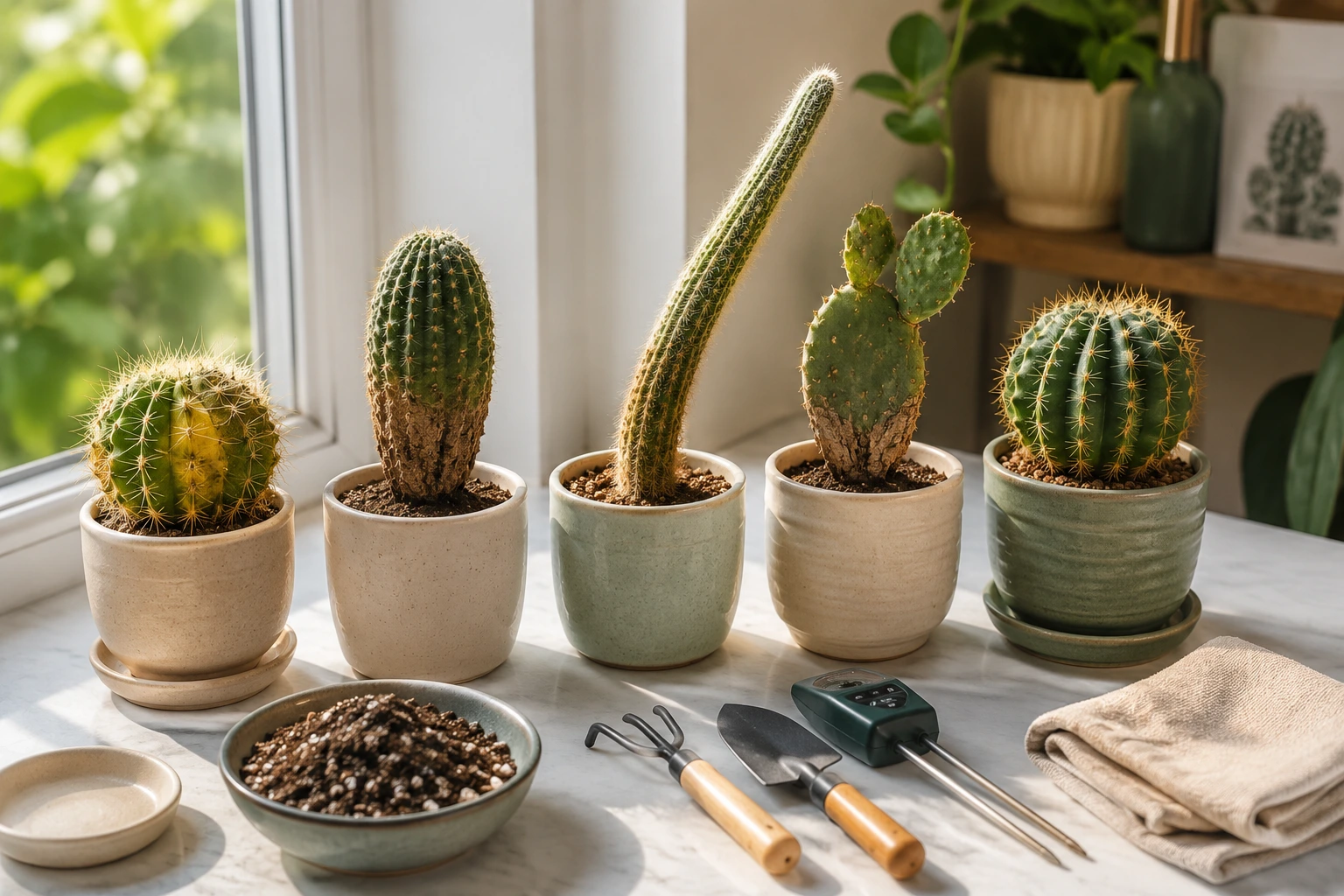
The most common causes of a brown cactus are sunburn, overwatering, underwatering, root rot, pests, physical damage, cold stress, or natural corking. The key is to look closely at the brown area and check if it is dry, soft, spreading, or firm.
Quick answer: A cactus usually turns brown because of sunburn, too much water, root rot, dry stress, pests, cold damage, or natural aging called corking.
1. Sunburn
Sunburn is one of the most common reasons a cactus turns brown. Cactus plants love bright light, but if they are suddenly moved from shade or indoor light into strong direct sunlight, their skin can burn.
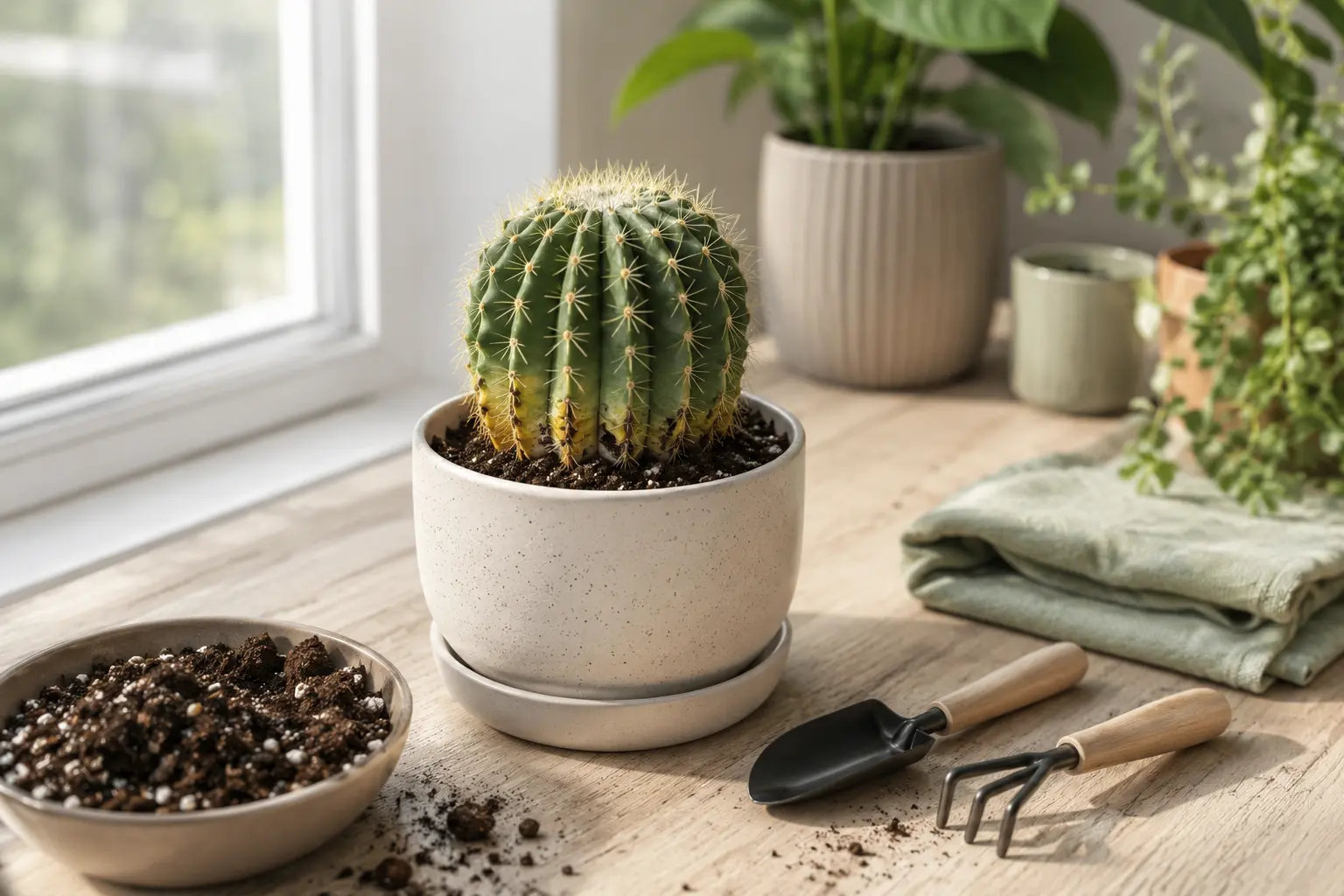
Sunburn often appears as dry yellow, white, tan, or brown patches on the side facing the window or sun. These marks usually feel dry and rough, not soft or mushy.
How to Fix Sunburn
Move the cactus slightly away from strong direct sun or use a thin curtain to soften the light. Do not move a cactus suddenly into intense sunlight. Increase light exposure slowly over several days or weeks.
Brown sunburn marks may not fully disappear, but you can stop the damage from spreading by adjusting the light.
2. Overwatering
Overwatering can also make a cactus turn brown. When cactus roots sit in wet soil for too long, they can become weak or rotten. The cactus may then develop brown, black, yellow, or soft areas.
If the brown area feels soft, mushy, or watery, overwatering may be the problem. You may also notice that the soil stays wet for many days or smells bad.
How to Fix Overwatering
Stop watering immediately and let the soil dry completely. If the cactus feels soft or the soil smells bad, remove the cactus from the pot and inspect the roots. Rotten roots are usually brown, black, soft, or slimy.
Cut away rotten roots with clean scissors, let the cactus dry for a few days, and repot it in fresh dry cactus soil.
3. Root Rot
Root rot is a serious problem that often starts from overwatering or poor drainage. When the roots rot, the cactus cannot absorb water and nutrients properly. This can cause brown or black areas, soft stems, and plant collapse.
If the base of the cactus is brown, soft, or mushy, root rot may already be spreading into the body of the plant. In this case, quick action is important.
How to Fix Root Rot
Remove the cactus from the pot and check the roots. Cut away all rotten parts using a clean knife or scissors. If the lower part of the cactus body is rotten, you may need to cut above the damaged area and save the healthy top as a cutting.
Let the cutting dry and form a callus before planting it in dry cactus soil.
4. Underwatering
Although cactus plants need little water, they can still become too dry. If a cactus does not receive water for a very long time, it may become wrinkled, dry, and brown in some areas.
Underwatered cactus tissue often feels dry, firm, or shriveled rather than soft. The soil may be extremely dry and pulling away from the sides of the pot.
How to Fix Underwatering
Water the cactus deeply until water drains from the bottom of the pot. Then let the soil dry completely before watering again. Avoid giving tiny amounts of water every day because cactus plants prefer deep watering followed by a dry period.
5. Poor Drainage
A cactus can turn brown if the pot or soil does not drain well. Pots without drainage holes trap water at the bottom, and heavy soil can stay wet for too long. This creates a high risk of root rot.
Even if you water only sometimes, poor drainage can still damage the roots slowly.
How to Improve Drainage
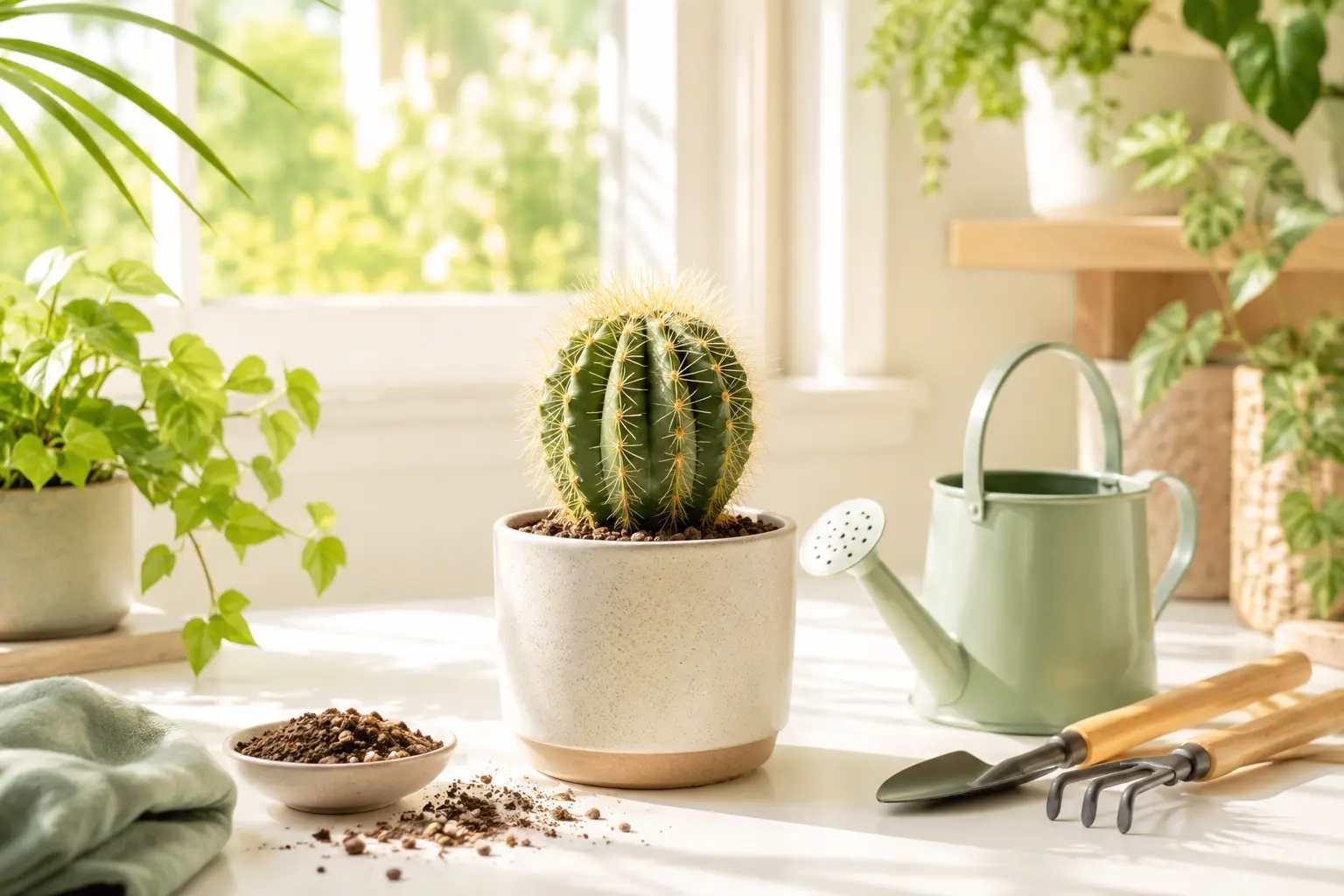
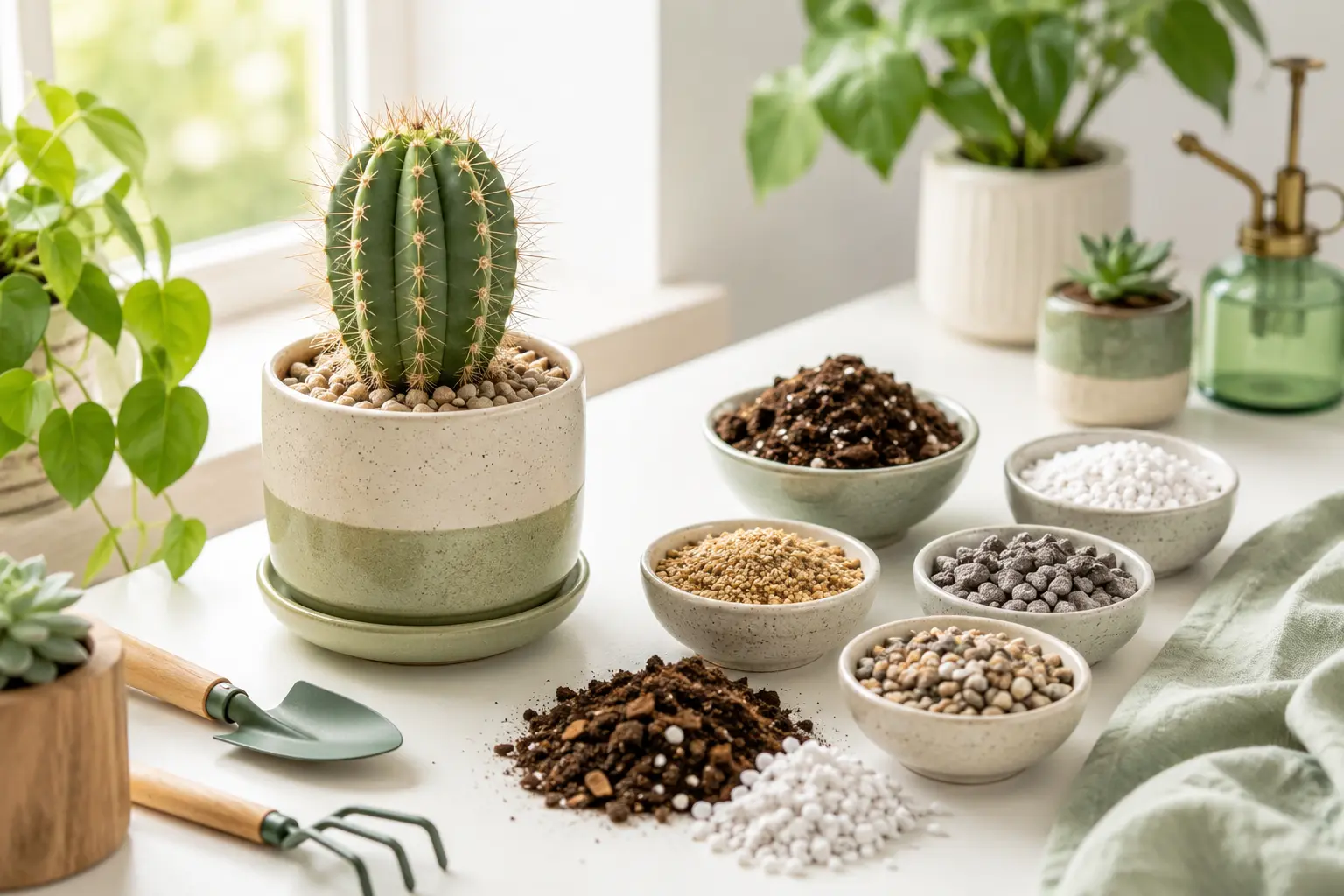
Use a pot with drainage holes and a fast-draining cactus soil mix. You can improve soil drainage with perlite, pumice, coarse sand, or small gravel. Avoid using heavy garden soil for cactus plants.
6. Pests
Pests can cause brown marks, weak growth, and damaged cactus skin. Common cactus pests include mealybugs, scale insects, and spider mites. They can feed on the plant and create small brown spots or damaged patches.
Look closely for white cotton-like spots, tiny insects, sticky areas, webbing, or small brown bumps on the cactus.
How to Remove Pests
Isolate the affected cactus from other plants. Remove visible pests with a cotton swab dipped in rubbing alcohol. For larger pest problems, use a plant-safe insecticidal soap and follow the instructions carefully.
7. Cold Damage
Cold temperatures can damage cactus tissue and make it turn brown, black, or watery. This often happens when a cactus is placed near a cold window, cold draft, or freezing area during winter.
Cold-damaged areas may look soft, dark, or collapsed. Some damage cannot be reversed, but you can prevent it from spreading by moving the cactus to a warmer stable location.
How to Prevent Cold Damage
Keep your cactus away from cold windows, doors, and drafts during winter. Place it in a bright room with stable temperature and reduce watering during cooler months.
8. Natural Corking
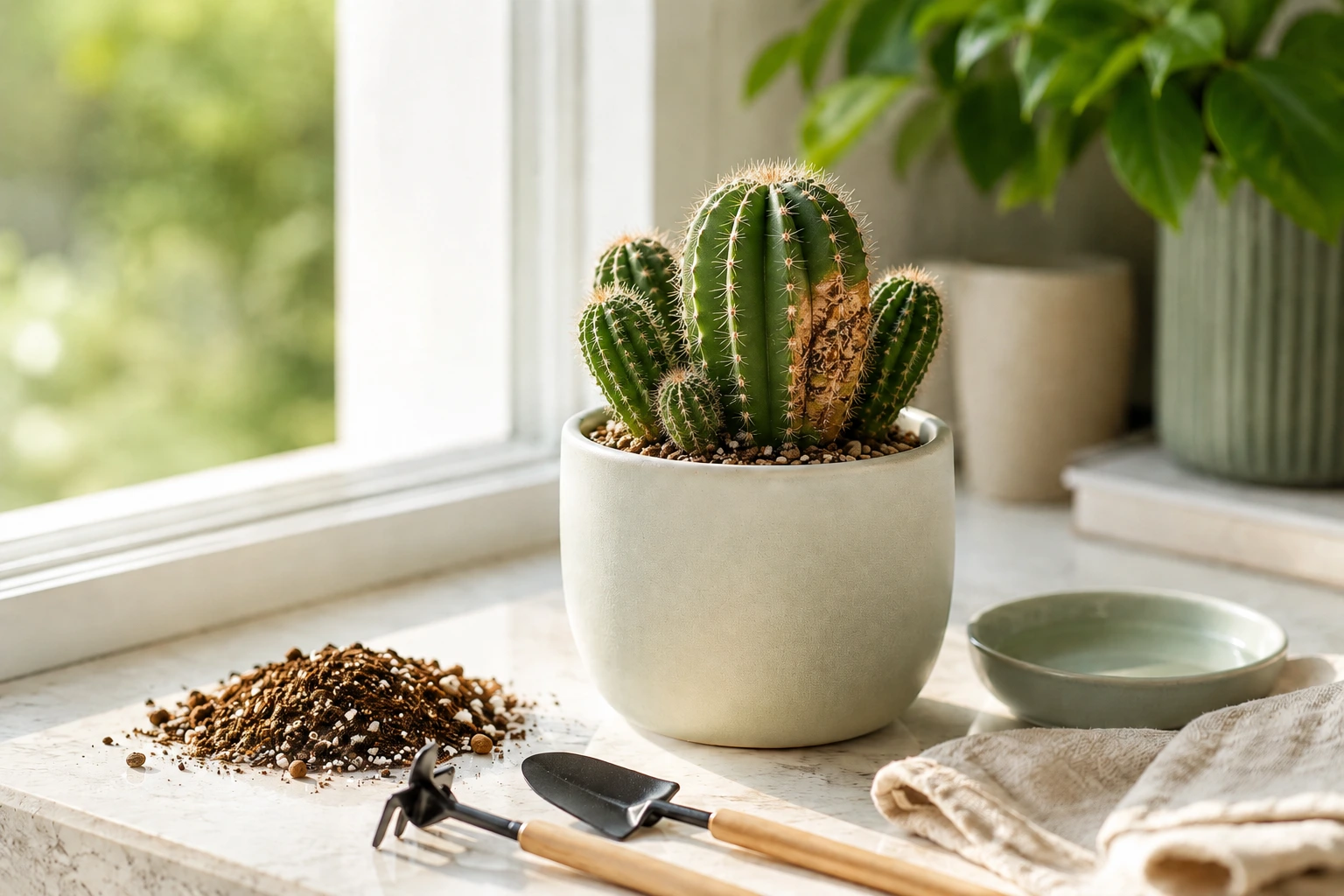
Sometimes brown color on a cactus is natural. Older cactus plants may develop a hard brown layer near the base. This is called corking, and it is a normal aging process.
Corking usually starts at the bottom of the cactus and feels firm, dry, and woody. It does not spread quickly like rot and does not smell bad. If the cactus is otherwise healthy, corking is usually not a problem.
How to Tell If Brown Cactus Spots Are Serious
The texture of the brown area is very important. Dry, firm, woody brown areas are often less serious. Soft, mushy, black, watery, or spreading brown areas are more dangerous and may indicate rot.
- Dry and firm brown patches may be sunburn or corking.
- Soft brown patches may be rot or overwatering.
- Brown areas near the base may be corking or root rot.
- Fast-spreading brown spots need quick action.
- Bad smell usually means rot.
Simple Checklist to Fix a Brown Cactus
- Check if the brown area is dry or soft.
- Check if the soil is wet or dry.
- Stop watering if the soil is moist.
- Move the cactus away from harsh direct sun if it has sunburn.
- Inspect roots if the cactus feels soft or loose.
- Use fast-draining cactus soil.
- Make sure the pot has drainage holes.
- Look carefully for pests.
Final Thoughts
A cactus turning brown can be caused by sunburn, overwatering, root rot, underwatering, poor drainage, pests, cold damage, or natural corking. The most important thing is to check the texture of the brown area and the condition of the soil.
If the brown area is dry and firm, it may be sunburn or natural aging. If it is soft, mushy, spreading, or smells bad, you should act quickly to stop rot. With proper light, careful watering, fast-draining soil, and a pot with drainage holes, your cactus has a much better chance of staying healthy.