Learn how to care for cactus plants in summer, including watering, sunlight, heat protection, soil drainage, outdoor care, and common summer cactus problems.
Cactus Care in Summer: What You Need to Know
Summer is an important season for cactus plants. Many cactus plants grow more actively during warm months because they receive more light, more warmth, and longer days. This can be a great time for healthy growth, but it can also bring problems if the cactus gets too much water, too much direct sun, or extreme heat.
Caring for a cactus in summer is not difficult, but you need to adjust your routine. Your cactus may need more frequent watering than in winter, brighter light, good airflow, and protection from very harsh afternoon sun. In this guide, you will learn how to keep your cactus healthy and strong during summer.
Do Cactus Plants Grow More in Summer?
Many cactus plants grow more during spring and summer. Warm temperatures and bright light help the plant produce new growth. You may notice new spines, new pads, new stems, or a fuller shape during this season.
However, not every cactus grows at the same speed. Some cactus types grow slowly even in summer. Slow growth does not always mean the plant is unhealthy, especially if it is firm, green, and receiving proper care.
Beginner tip: In summer, cactus plants usually need brighter light, careful watering, fast-draining soil, and protection from extreme heat.
How Often Should You Water a Cactus in Summer?
In summer, cactus plants often need more water than in winter because the weather is warmer and the soil dries faster. For many indoor cactus plants, watering every two to three weeks may be enough. Outdoor cactus plants may dry faster and may need water more often.
The best rule is to water only when the soil is completely dry. Do not water your cactus just because it is summer. Always check the soil first, because too much water can still cause root rot, even during hot weather.
Check the Soil Before Watering
Before watering, touch the soil with your finger. If the soil feels dry one or two inches deep, your cactus may be ready for water. If the soil still feels moist, wait a few more days.
You can also use a wooden stick to test moisture. Push the stick into the soil and pull it out. If wet soil sticks to it, the cactus does not need water yet. If the stick comes out dry, it is usually safe to water.
Water Deeply, Then Let the Soil Dry
When you water your cactus in summer, water deeply until extra water drains from the bottom of the pot. This helps moisture reach the roots properly. After watering, let the soil dry completely before watering again.
Avoid giving small amounts of water every day. Frequent light watering can keep the surface wet without properly helping the roots. Deep watering followed by a dry period is usually better for cactus plants.
Give Your Cactus Enough Sunlight
Cactus plants love bright light, and summer usually provides plenty of it. A sunny window can be a great place for an indoor cactus. Most cactus plants need several hours of bright light each day to stay healthy.
If your cactus gets enough light, it should stay firm, strong, and compact. If it does not get enough light, it may stretch, lean, or grow tall and thin as it searches for sunlight.
Protect Cactus from Harsh Afternoon Sun
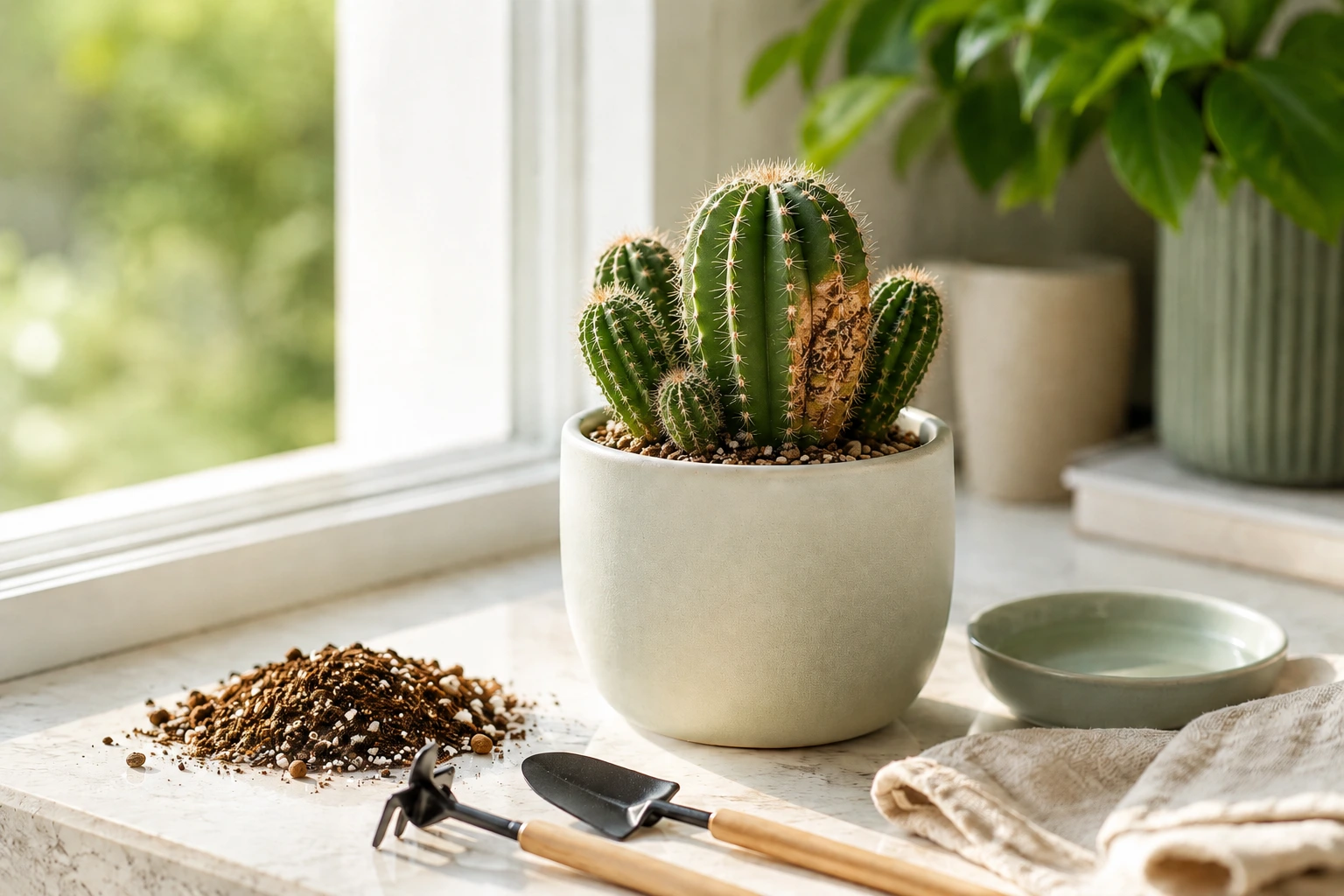
Even though cactus plants like sunlight, very strong summer sun can sometimes cause sunburn, especially for indoor cactus plants that are not used to direct sunlight. Sunburn may appear as yellow, brown, white, or dry patches on the cactus skin.
Morning sun is usually gentler than afternoon sun. If your cactus is near a very hot window, use a thin curtain or move the plant slightly away from the glass during the hottest part of the day.
Move Outdoor Cactus Slowly
If you want to move an indoor cactus outside during summer, do it slowly. A cactus that has been indoors for months can burn if it is suddenly placed in strong outdoor sun.
Start by placing it outside in bright shade for a few days. Then allow gentle morning sun. After one or two weeks, you can increase sun exposure if the cactus looks healthy. This gradual process helps prevent sunburn and stress.
Watch Out for Extreme Heat
Cactus plants can handle warmth, but extreme heat can still stress them, especially in small pots. Pots can become very hot in direct sun, and this can damage the roots.
If temperatures are very high, give your cactus some protection during the hottest hours. Good airflow, light shade, and avoiding hot glass windows can help keep the plant comfortable.
Use Fast-Draining Soil
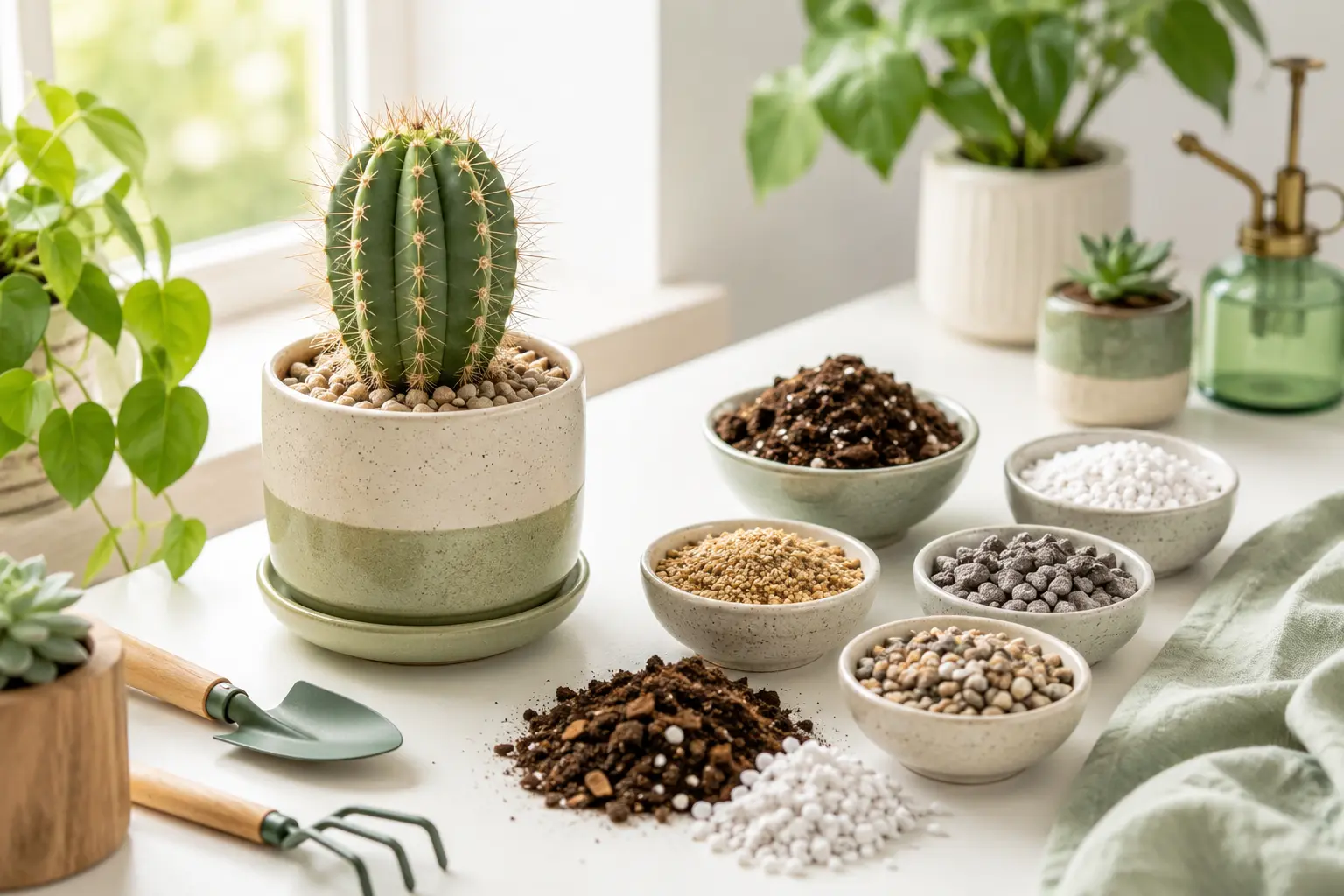
Fast-draining soil is very important in summer. Even though soil dries faster in warm weather, cactus roots can still rot if the soil holds too much moisture. A good cactus soil mix should allow water to pass through quickly.
You can use a cactus potting mix or improve regular potting soil with perlite, pumice, coarse sand, or small gravel. The goal is to keep the soil light, airy, and quick to dry.
Choose Pots with Drainage Holes
A pot with drainage holes is essential for cactus care in summer. When you water deeply, extra water must be able to leave the pot. Without drainage holes, water can collect at the bottom and cause root problems.
Terracotta pots are a good summer choice because they help the soil dry faster. Ceramic and plastic pots can also work, but you should check the soil carefully before watering again.
Should You Fertilize Cactus in Summer?
Summer can be a good time to fertilize cactus plants because many of them are actively growing. Use a cactus fertilizer or a balanced houseplant fertilizer diluted to a weaker strength.
Do not fertilize too often. Too much fertilizer can damage the roots or cause weak growth. Once a month during the growing season is enough for many cactus plants, but always follow the fertilizer instructions.
Common Summer Cactus Problems
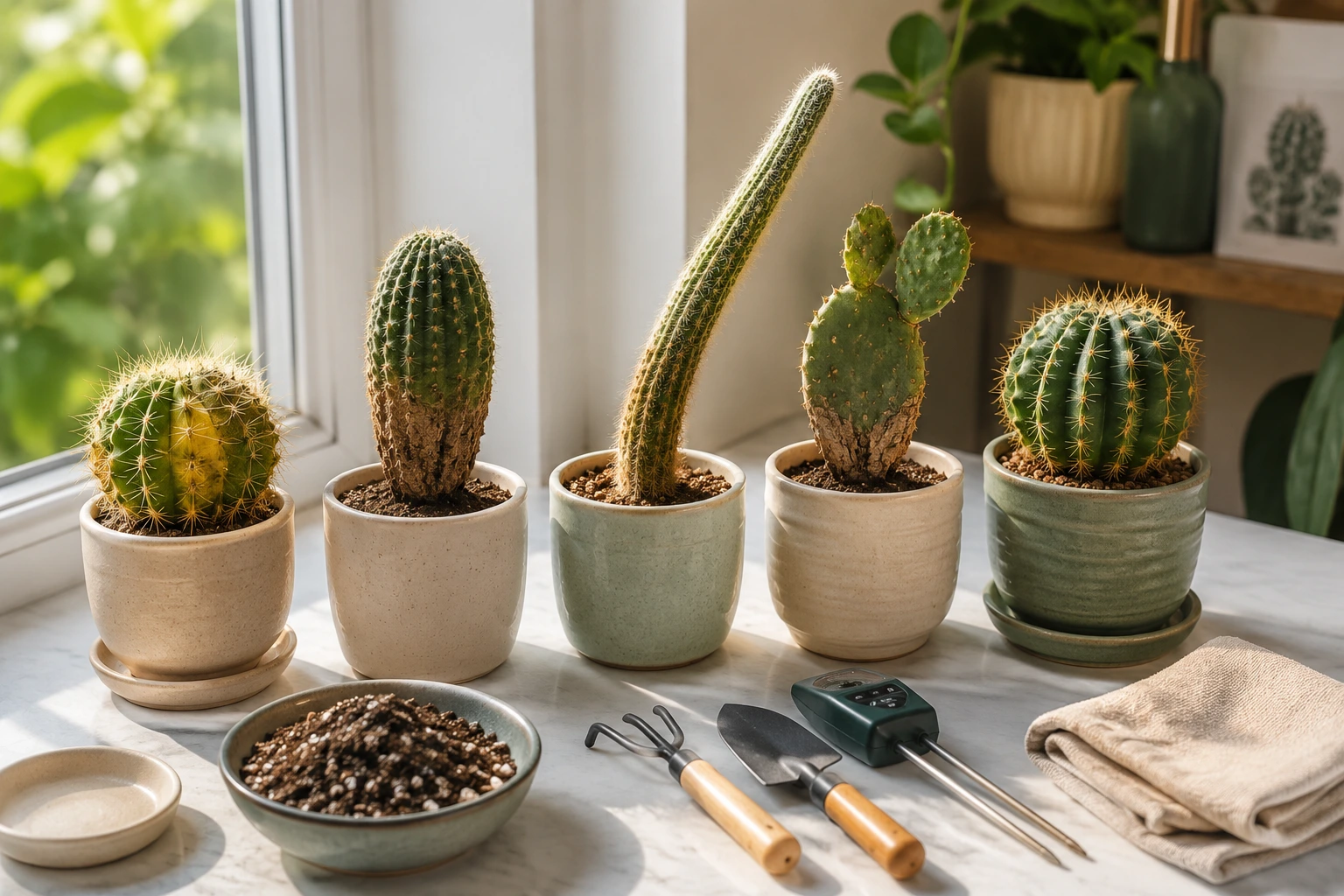
Summer can bring fast growth, but it can also bring common cactus problems. Most issues come from too much water, sudden sunlight changes, or extreme heat.
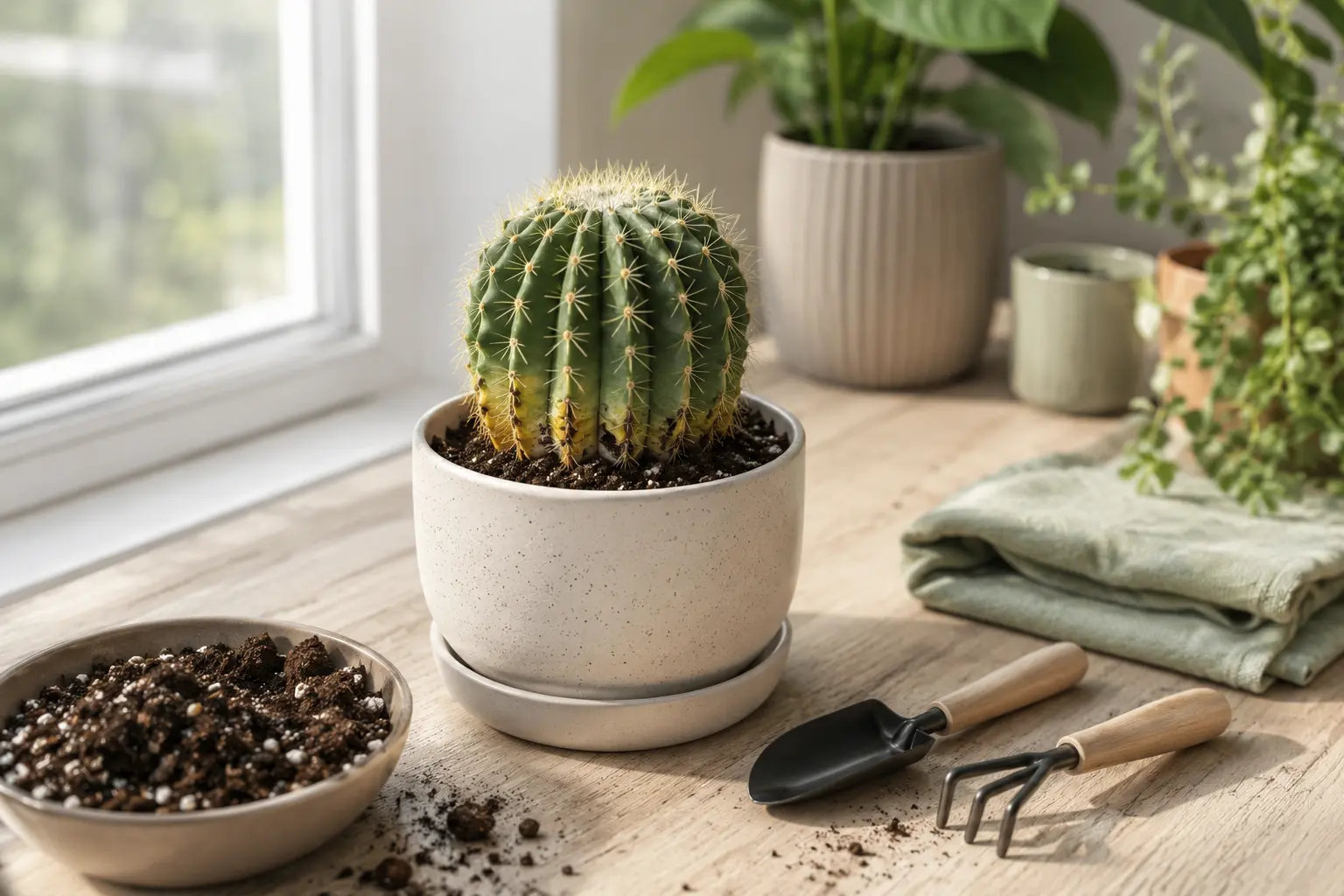
- Yellow cactus color from overwatering or sun stress.
- Brown dry patches from sunburn.
- Soft or mushy stems from wet soil.
- Tall and thin growth from not enough light.
- Wrinkled cactus from underwatering or heat stress.
- Pests such as mealybugs, spider mites, or scale insects.
Summer Cactus Care Checklist
- Place your cactus in bright natural light.
- Protect it from harsh afternoon sun if needed.
- Water only when the soil is completely dry.
- Water deeply, then let the soil dry again.
- Use fast-draining cactus soil.
- Choose a pot with drainage holes.
- Move indoor cactus outdoors gradually.
- Watch for pests, sunburn, and soft stems.
Final Thoughts
Cactus care in summer is all about balance. Your cactus may enjoy more light and may need water more often than in winter, but it still needs dry soil between waterings. Too much water and sudden strong sun are the biggest risks during hot months.
To keep your cactus healthy in summer, give it bright light, protect it from extreme heat, use fast-draining soil, and water only when the soil is completely dry. With the right care, summer can be the best season for strong cactus growth.