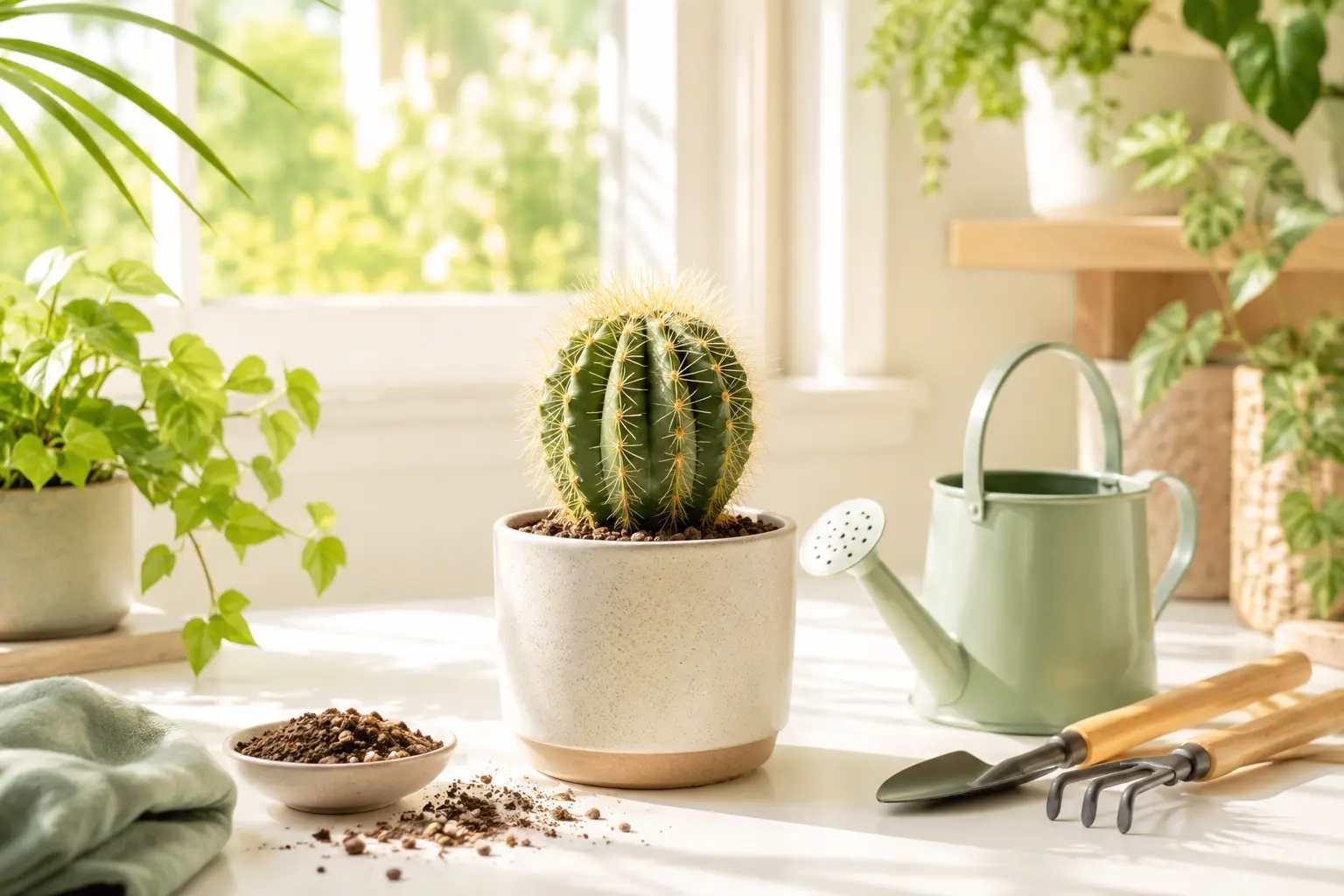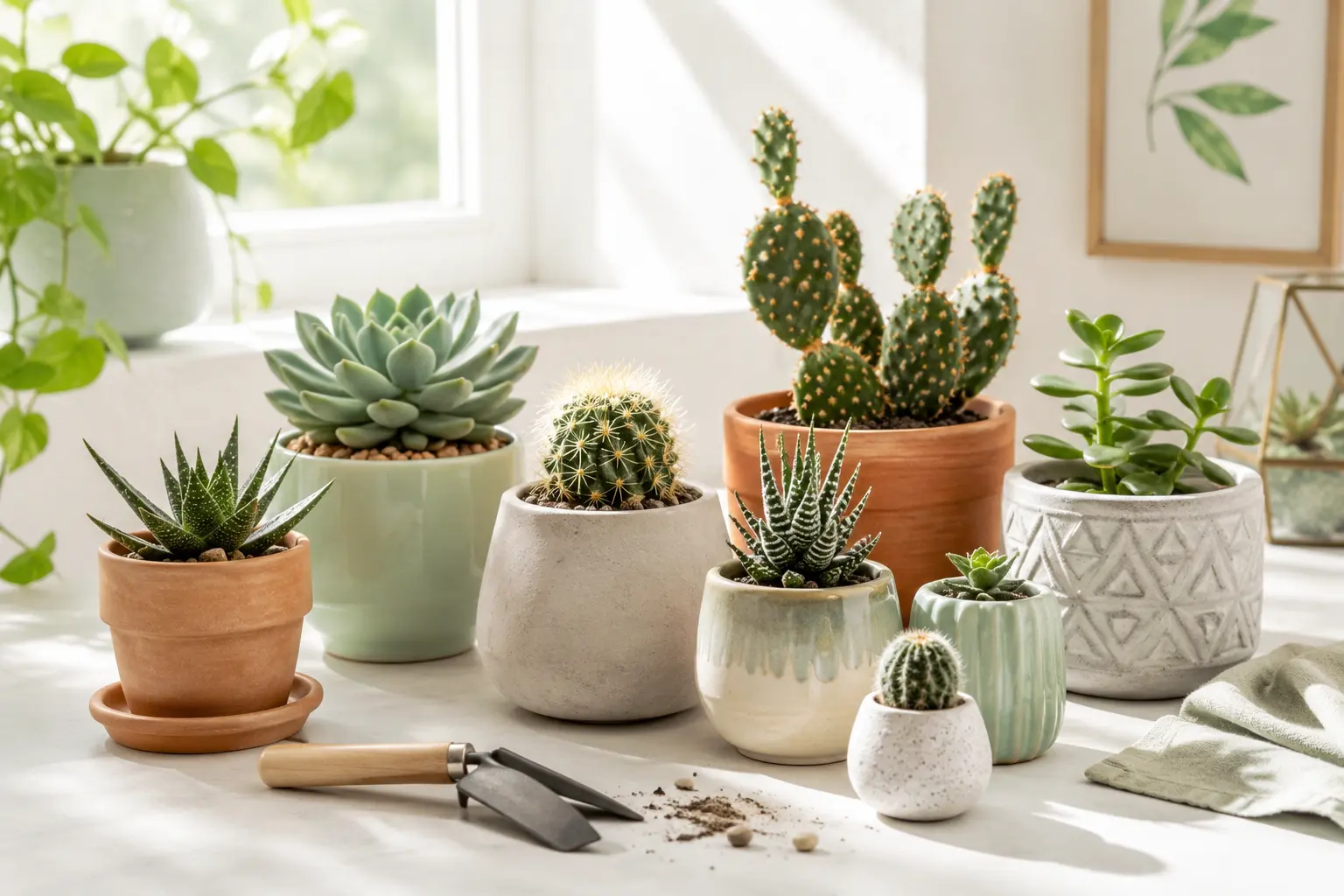
Learn how often to water a cactus indoors, how to know when your cactus needs water, and the most common watering mistakes beginners should avoid.
How Often Should You Water a Cactus? Complete Beginner Guide
Cactus plants are loved by many plant owners because they are beautiful, simple, and easy to care for. However, one of the biggest mistakes beginners make is watering their cactus too often. Even though cactus plants are strong, too much water can damage their roots and make the plant weak or soft.
If you want your cactus to stay healthy indoors, the most important thing to understand is when to water it and when to leave it dry. In this guide, you will learn how often to water a cactus, how to check the soil, and what signs show that your cactus needs more or less water.
How Often Should You Water a Cactus?
In general, most indoor cactus plants should be watered only when the soil is completely dry. This usually means watering every two to three weeks during warm months, and less often during winter.
There is no perfect watering schedule for every cactus because the right timing depends on the plant size, pot type, soil mix, room temperature, and sunlight. A cactus placed near a bright sunny window may dry faster than a cactus kept in a cooler or darker room.
The Best Rule: Check the Soil First
The best way to know if your cactus needs water is to check the soil. Put your finger about one or two inches into the soil. If the soil feels dry, you can water the cactus. If the soil still feels moist, wait a few more days before watering.
You can also use a small wooden stick. Push it into the soil, then remove it. If the stick comes out clean and dry, the cactus may need water. If soil sticks to it, the plant still has enough moisture.
How to Water a Cactus Correctly
When watering your cactus, give it a good amount of water until the extra water drains from the bottom of the pot. This helps the roots receive enough moisture. After that, let the soil dry completely before watering again.
Never let your cactus sit in water. If your pot has a saucer under it, empty the saucer after watering. Standing water can cause root rot, which is one of the most dangerous problems for cactus plants.
Why Overwatering Is Dangerous
Cactus plants are designed to store water inside their stems. This is why they can survive in dry conditions. When they receive too much water, their roots can become weak and begin to rot.
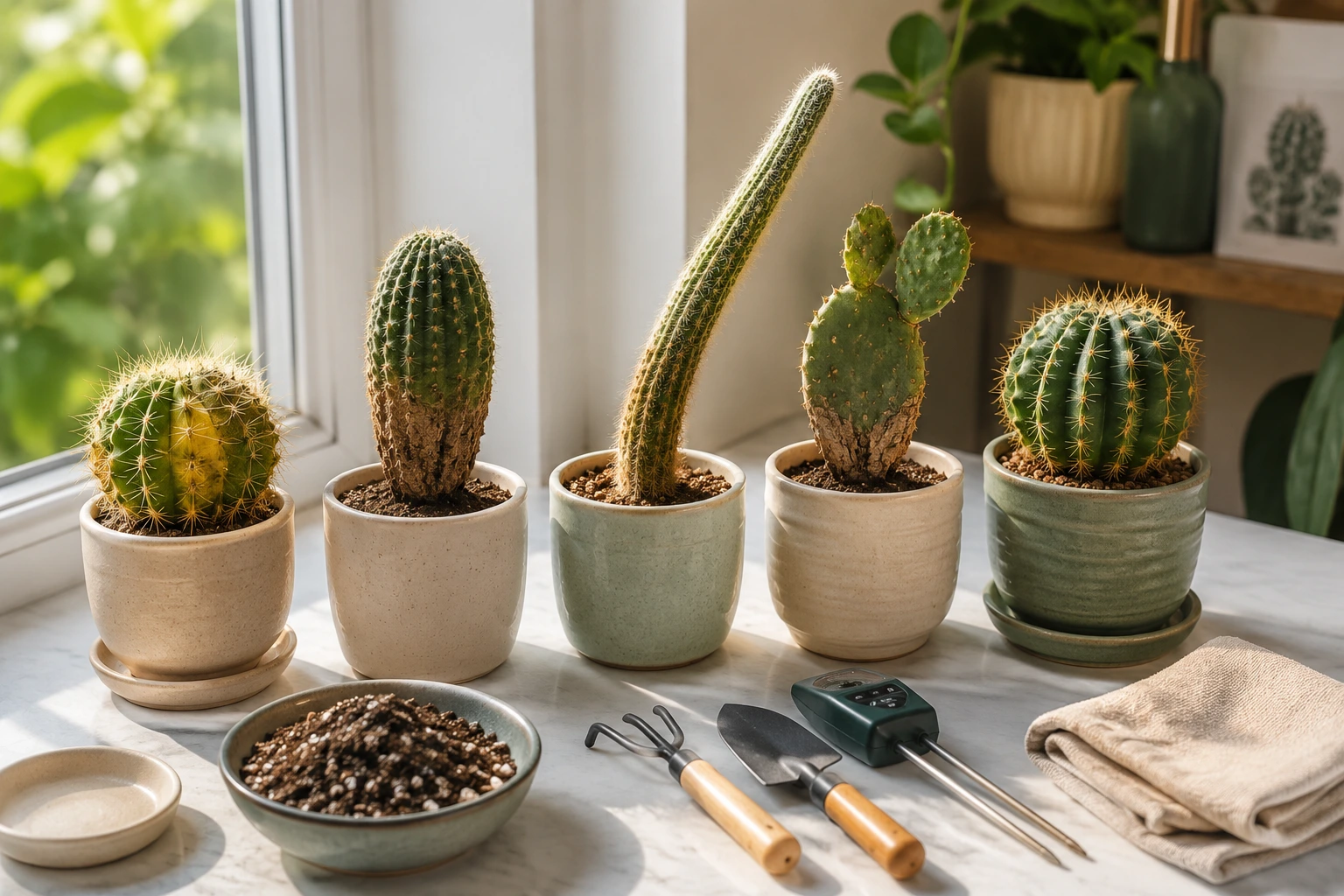
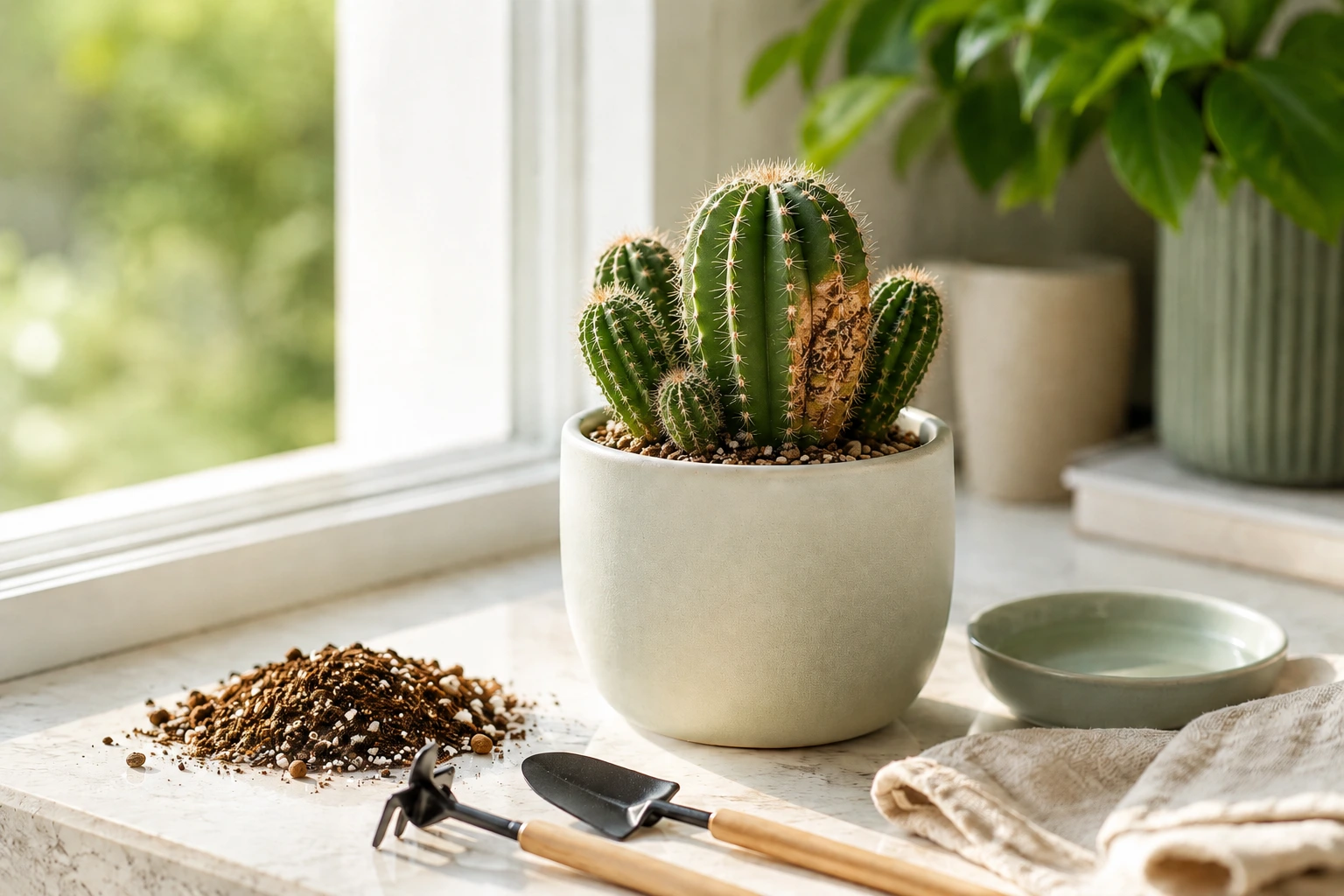
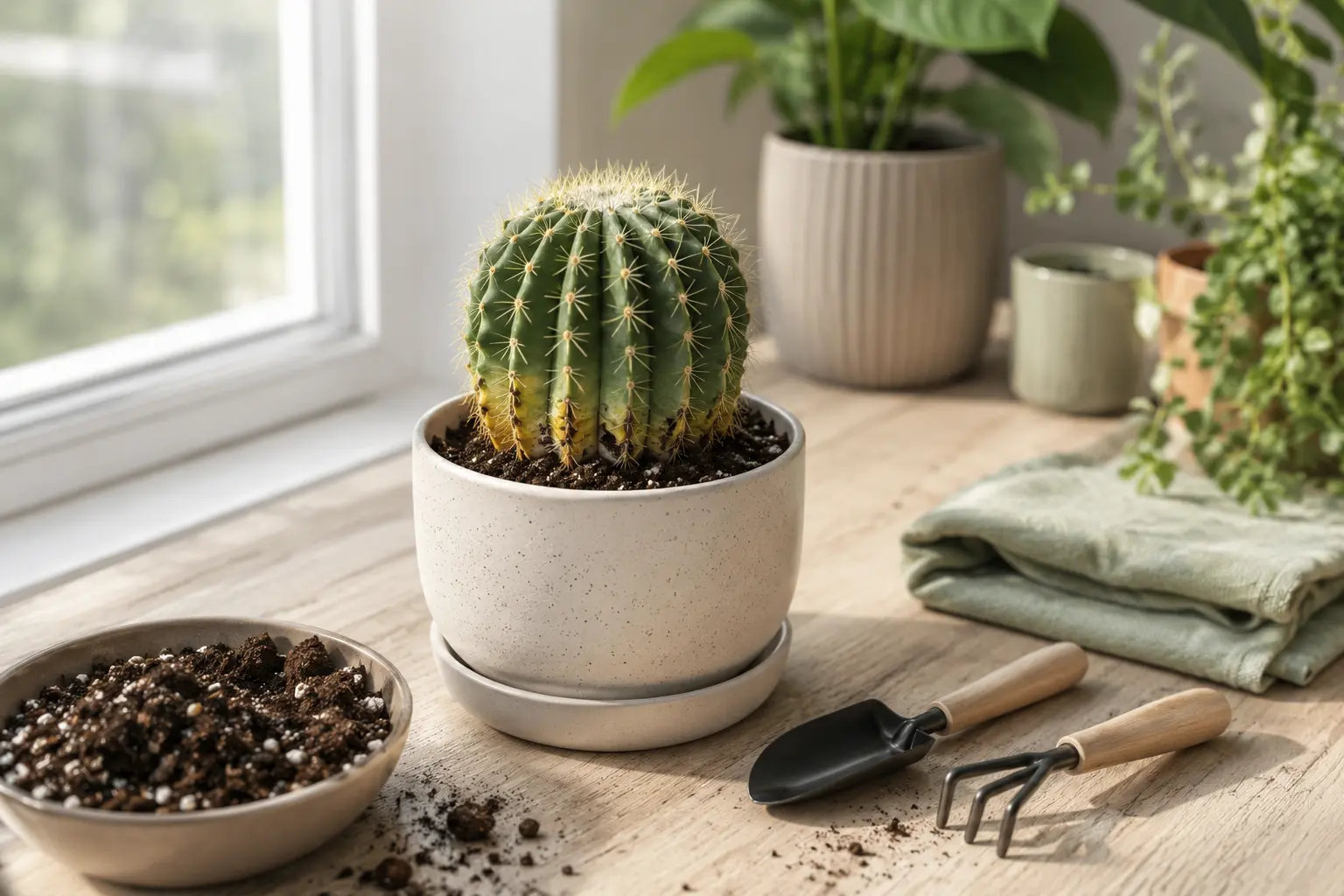
Signs of overwatering include yellow color, soft stems, mushy parts, black spots, and a bad smell from the soil. If you notice these signs, stop watering immediately and check the roots if possible.
Signs Your Cactus Needs Water
A thirsty cactus may look slightly wrinkled, dry, or smaller than usual. The soil will be completely dry, and the plant may look less firm. However, it is better to underwater a cactus than to overwater it.
If your cactus looks dry and the soil is also dry, give it water and place it in bright light. Most cactus plants recover well when watered correctly.
Watering Cactus in Summer
During spring and summer, cactus plants usually grow more actively. Because the weather is warmer and the light is stronger, the soil dries faster. In this season, you may need to water your cactus every two or three weeks.
Always check the soil before watering. Some cactus plants may need water more often, while others may stay dry for longer depending on the environment.
Watering Cactus in Winter
In winter, cactus plants usually grow more slowly. They need less water because the temperature is lower and the soil dries more slowly. During winter, watering once every four to six weeks may be enough for many indoor cactus plants.
If your home is cold or your cactus receives less sunlight, you should reduce watering even more. Too much water in winter can easily cause root problems.
Use the Right Soil Mix
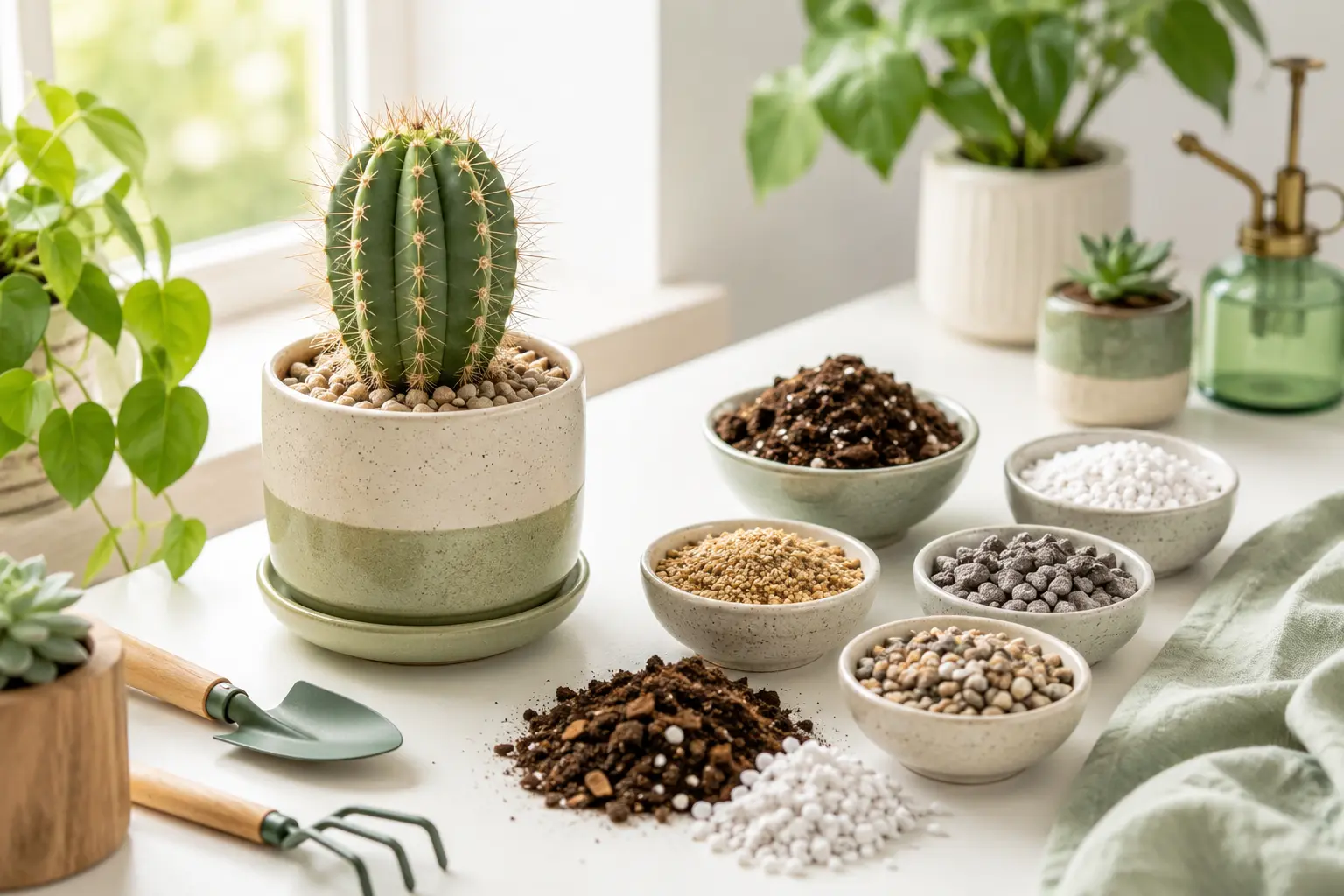
Good cactus care is not only about watering. The soil is also very important. Cactus plants need fast-draining soil that does not stay wet for a long time.
A cactus soil mix is usually better than normal garden soil. You can also improve drainage by adding materials like perlite, pumice, or coarse sand. The goal is to help water pass through the soil quickly.
Choose a Pot with Drainage Holes
A pot with drainage holes is very important for cactus plants. Without drainage holes, extra water stays inside the pot and can damage the roots.
Terracotta pots are a good choice because they allow moisture to escape faster. Plastic pots can also work, but you need to be more careful with watering because they keep moisture longer.
Common Cactus Watering Mistakes
Many beginners water their cactus on a fixed schedule without checking the soil. This can be risky because the soil may still be wet. Another common mistake is using a pot without drainage holes.
Some people also water cactus plants too much in winter. Remember that cactus plants need less water when they are not growing actively. Always let the soil dry before watering again.
Final Thoughts
Watering a cactus is simple when you understand the basic rule: wait until the soil is completely dry. Avoid overwatering, use a well-draining soil mix, and choose a pot with drainage holes.
With the right watering routine, your cactus can stay healthy, strong, and beautiful indoors. Whether you are a beginner or a plant lover, learning how to water cactus plants correctly is one of the best ways to help them grow successfully.