Learn the most common cactus problems, including yellowing, browning, soft stems, leaning, root rot, pests, slow growth, and simple ways to fix each issue.
Common Cactus Problems and How to Fix Them
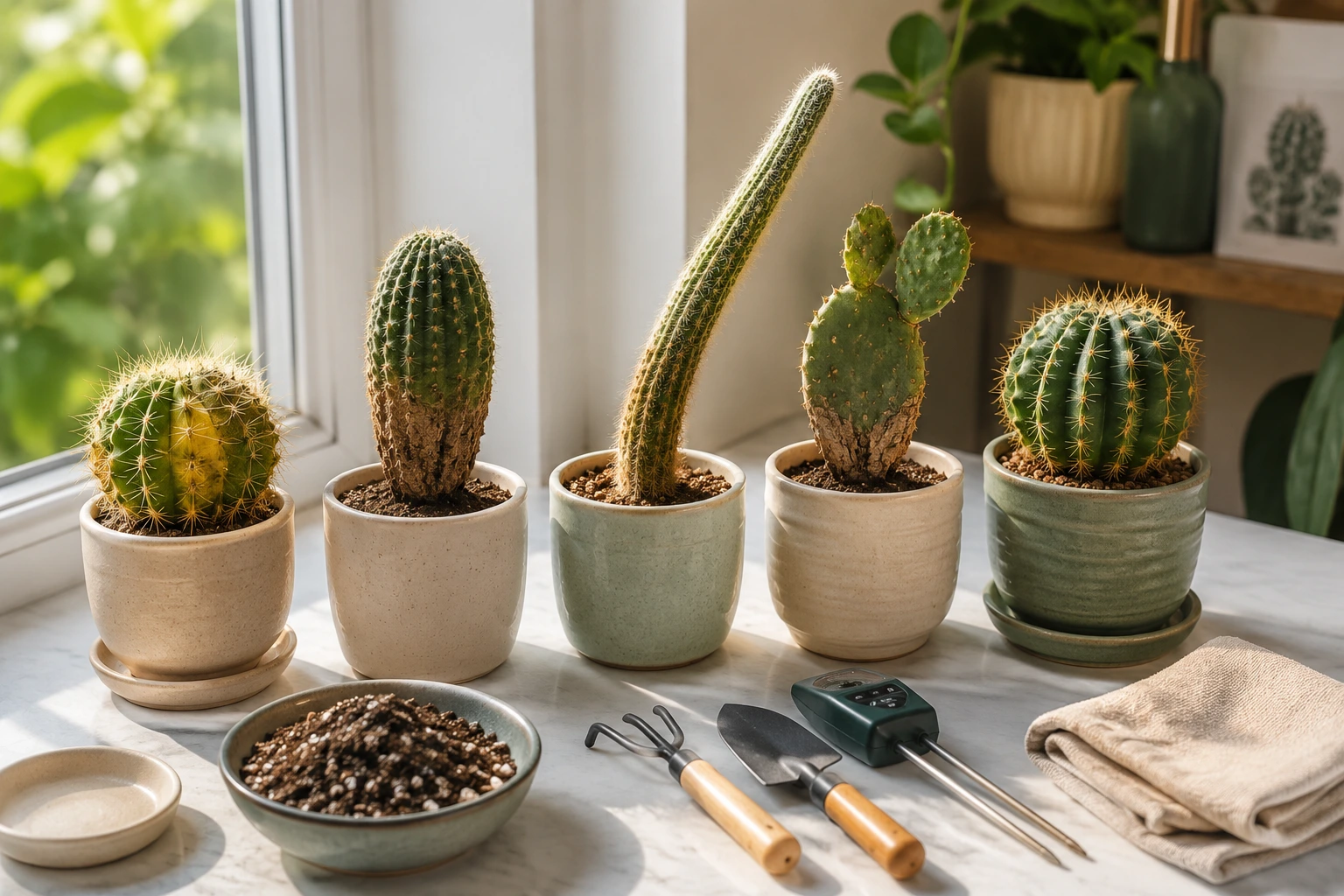
Cactus plants are known for being strong and low-maintenance, but they can still develop problems when their care conditions are not right. Yellowing, browning, soft stems, leaning, slow growth, and root rot are all common issues that many cactus owners face.
The good news is that most cactus problems can be fixed if you notice them early. In this guide, you will learn the most common cactus problems, what causes them, and how to help your cactus recover.
Quick tip: Most cactus problems come from too much water, poor drainage, low light, sudden sun exposure, cold damage, or pests.
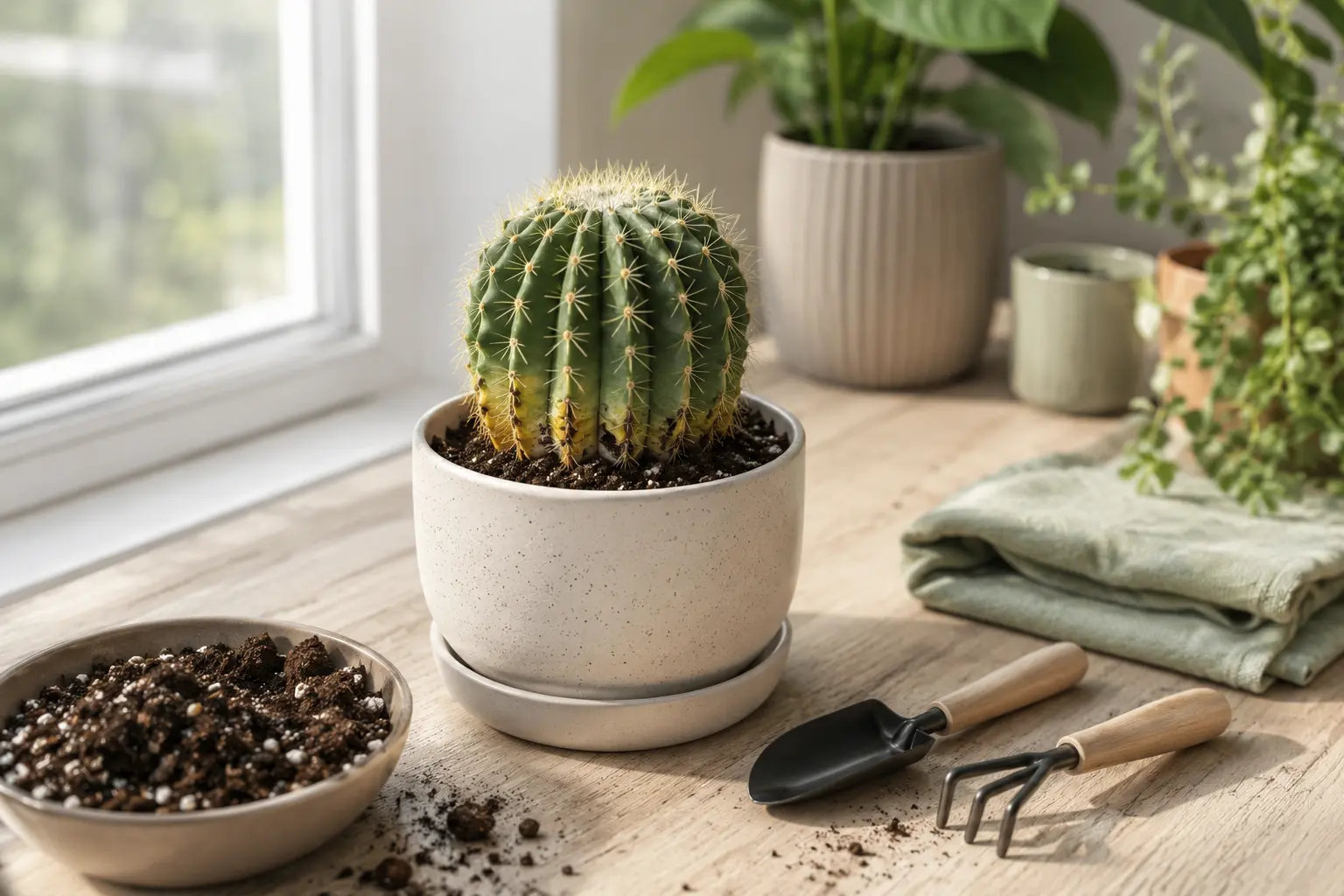
1. Cactus Turning Yellow
A cactus can turn yellow because of overwatering, low light, poor drainage, or stress. Yellowing is often one of the first warning signs that something is wrong with the plant’s care routine.
If the cactus is yellow and soft, the problem is likely too much water. If it is yellow and stretched, it may need more light.
How to Fix It
- Stop watering until the soil is completely dry.
- Move the cactus to a brighter location.
- Check that the pot has drainage holes.
- Repot in fresh fast-draining cactus soil if the soil stays wet.
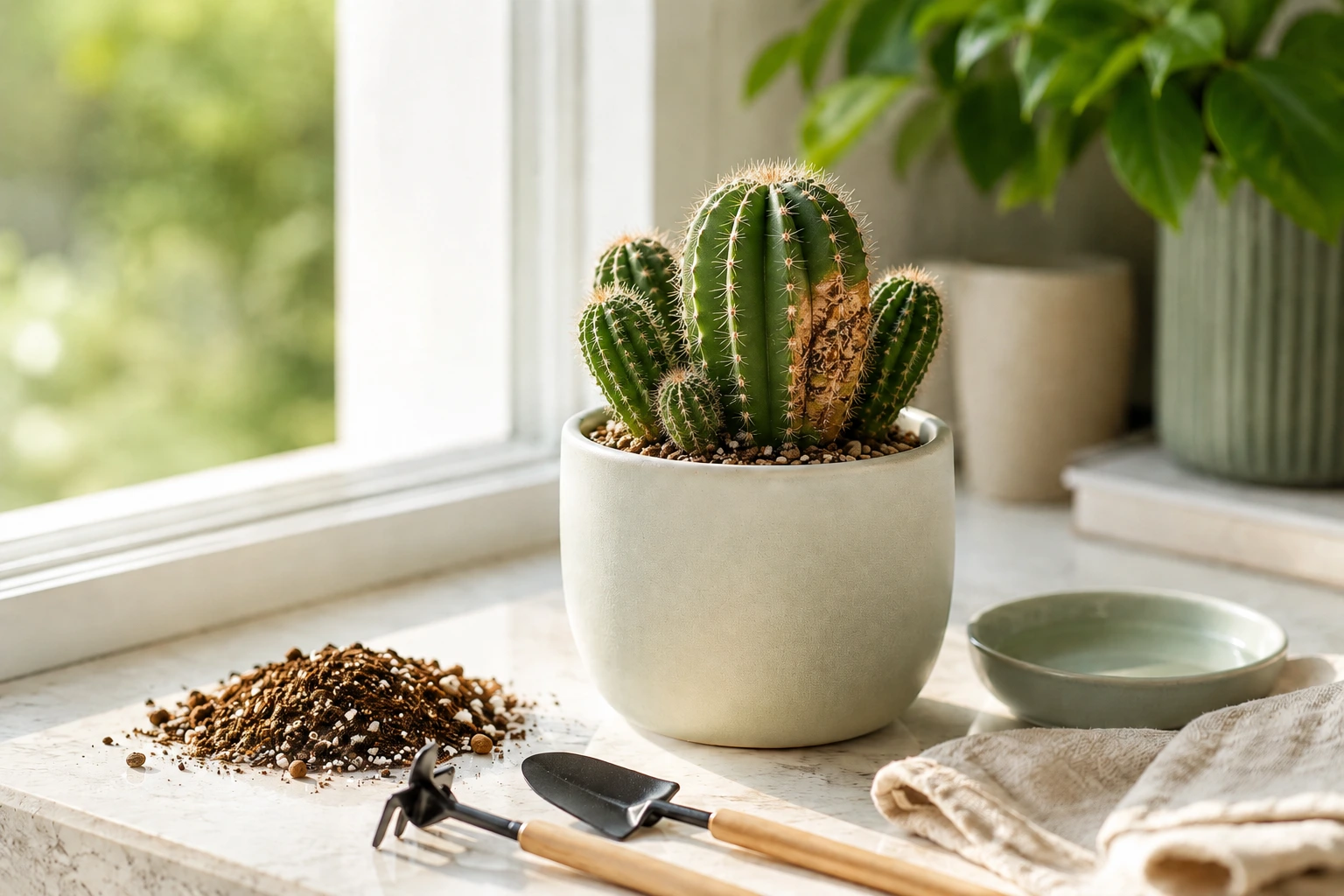
2. Cactus Turning Brown
Brown cactus spots can be caused by sunburn, root rot, underwatering, pests, cold damage, or natural corking. The most important thing is to check the texture of the brown area.
If the brown area is dry and firm, it may be sunburn or natural aging. If it is soft, black, mushy, or spreading, it may be rot.
How to Fix It
- Move the cactus away from harsh direct sun if it has sunburn.
- Check the roots if the brown area is soft or spreading.
- Remove rotten roots with clean scissors.
- Use fast-draining soil and avoid overwatering.
3. Soft and Mushy Cactus
A soft and mushy cactus is usually a serious warning sign. The most common cause is overwatering. When cactus roots stay wet for too long, they can rot, and the plant body may become soft, watery, or unstable.
Mushy cactus tissue can spread quickly, so it is important to act fast.
How to Fix It
- Stop watering immediately.
- Remove the cactus from the pot and check the roots.
- Cut away rotten roots or mushy parts with a clean tool.
- Let the cactus dry before repotting.
- Repot in fresh dry cactus soil.
4. Cactus Leaning to One Side
A cactus often leans because it is reaching toward light. This happens when light comes from only one direction, such as a window. Leaning can also happen because of weak roots, unstable soil, or a pot that is too small.
If the cactus is firm and green, the problem is probably light-related. If it is soft or loose, check the roots.
How to Fix It
- Move the cactus to a brighter location.
- Rotate the pot every one or two weeks.
- Repot in fresh soil if the cactus feels loose.
- Use a heavier pot for tall cactus plants.
- Add a temporary support stake if needed.
5. Cactus Getting Tall and Thin
If your cactus is getting tall and thin, it is usually not receiving enough light. This weak stretched growth is called etiolation. The cactus stretches upward or toward the window as it searches for brighter light.
Once a cactus grows thin, that part usually will not become thick again. However, new growth can become healthier if the plant receives better light.
How to Fix It
- Move the cactus closer to a bright window.
- Increase sunlight gradually to avoid sunburn.
- Use a grow light if your room is too dark.
- Reduce watering during low-light periods.
- Rotate the pot regularly.
6. Cactus Not Growing
A cactus may stop growing because of low light, winter dormancy, poor soil, lack of nutrients, root problems, or a pot that is too small. Slow growth is normal for many cactus plants, but no growth for a very long time may mean the plant needs better care.
How to Fix It
- Give the cactus more bright natural light.
- Check if the plant is in winter dormancy.
- Refresh old compact soil.
- Repot only if the cactus is root-bound.
- Fertilize lightly during the growing season only.
7. Wrinkled or Shriveled Cactus
A wrinkled cactus can mean the plant is thirsty, but it can also happen when roots are damaged and cannot absorb water. If the soil is very dry and the cactus feels firm, underwatering may be the cause. If the soil is wet and the cactus is wrinkled, root rot may be the problem.
How to Fix It
- Check the soil moisture first.
- Water deeply if the soil is completely dry.
- Check the roots if the soil is wet or smells bad.
- Avoid giving small amounts of water every day.
8. Root Rot
Root rot is one of the most dangerous cactus problems. It usually happens when the soil stays wet for too long. Rotten roots may look brown, black, soft, slimy, or smell bad.
If root rot is not treated, the cactus may become soft, yellow, brown, or collapse.
How to Fix It
- Remove the cactus from the pot.
- Cut away rotten roots with clean scissors.
- Let the plant dry for a few days.
- Repot in fresh dry cactus soil.
- Do not water immediately after repotting.
9. Cactus Sunburn
Cactus sunburn happens when a cactus is exposed to strong direct sunlight too suddenly. It often appears as white, yellow, tan, or brown dry patches on the side facing the sun.
How to Fix It
- Move the cactus away from harsh afternoon sun.
- Use a sheer curtain to soften strong light.
- Introduce direct sunlight gradually.
- Do not remove dry sunburn marks unless the tissue is rotten.
10. Pests on Cactus
Cactus plants can attract pests such as mealybugs, scale insects, and spider mites. Pests may cause white cottony spots, brown bumps, sticky areas, webbing, or weak growth.
How to Fix It
- Isolate the affected cactus from other plants.
- Remove visible pests with a cotton swab and rubbing alcohol.
- Use plant-safe insecticidal soap if needed.
- Check nearby plants for pests too.
Simple Cactus Care Checklist
- Place your cactus near bright natural light.
- Use fast-draining cactus soil.
- Choose a pot with drainage holes.
- Water only when the soil is completely dry.
- Reduce watering during winter.
- Avoid sudden strong sunlight after low-light conditions.
- Check roots if the cactus becomes soft or unstable.
- Inspect regularly for pests.
Final Thoughts
Common cactus problems often come from simple care mistakes such as overwatering, poor drainage, not enough light, sudden sun exposure, cold stress, or pests. By checking the plant early, you can often fix the problem before it becomes serious.
To keep your cactus healthy, give it bright light, dry soil between waterings, fast-draining cactus mix, and a pot with drainage holes. With the right care, your cactus can recover from many problems and continue growing strong indoors.