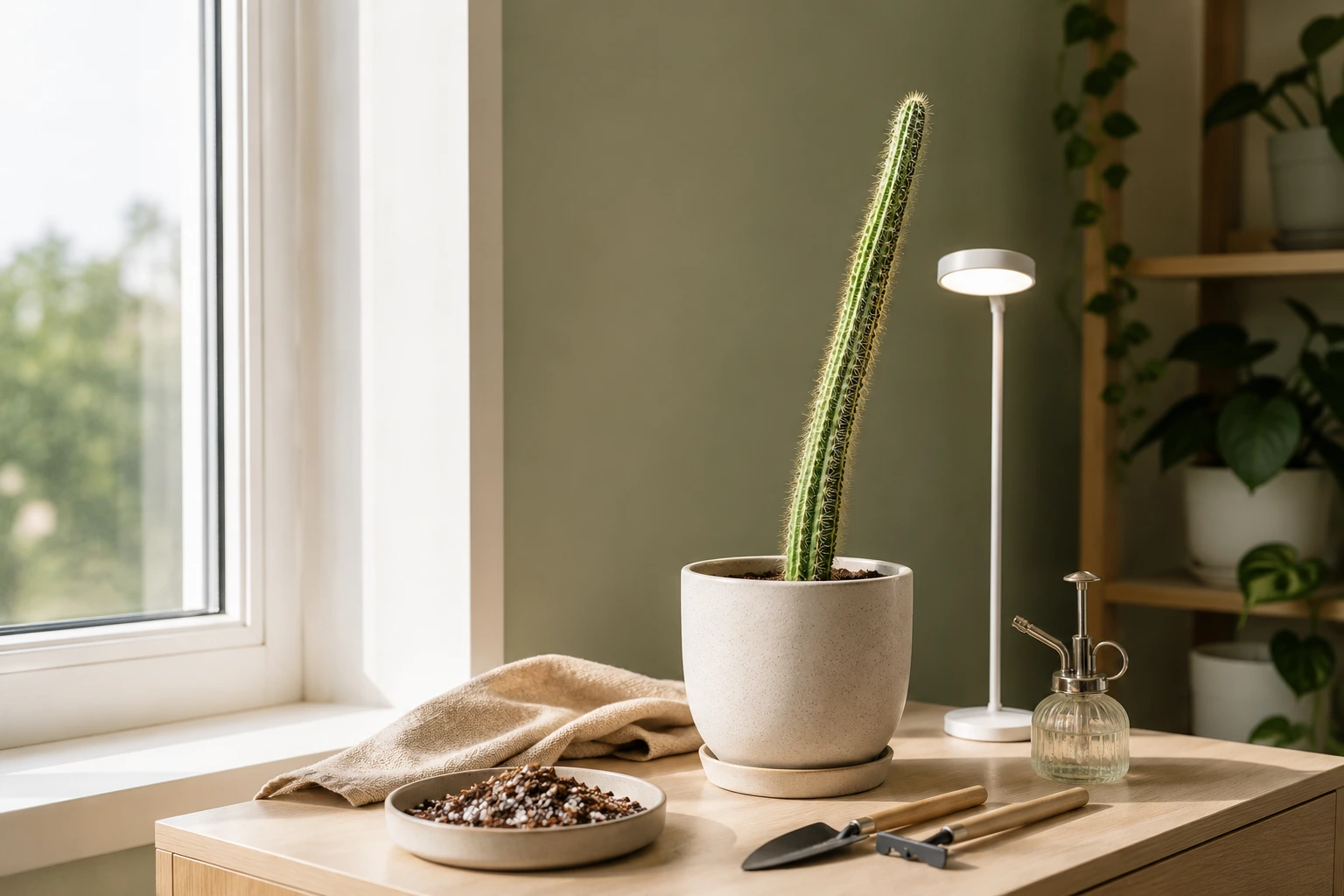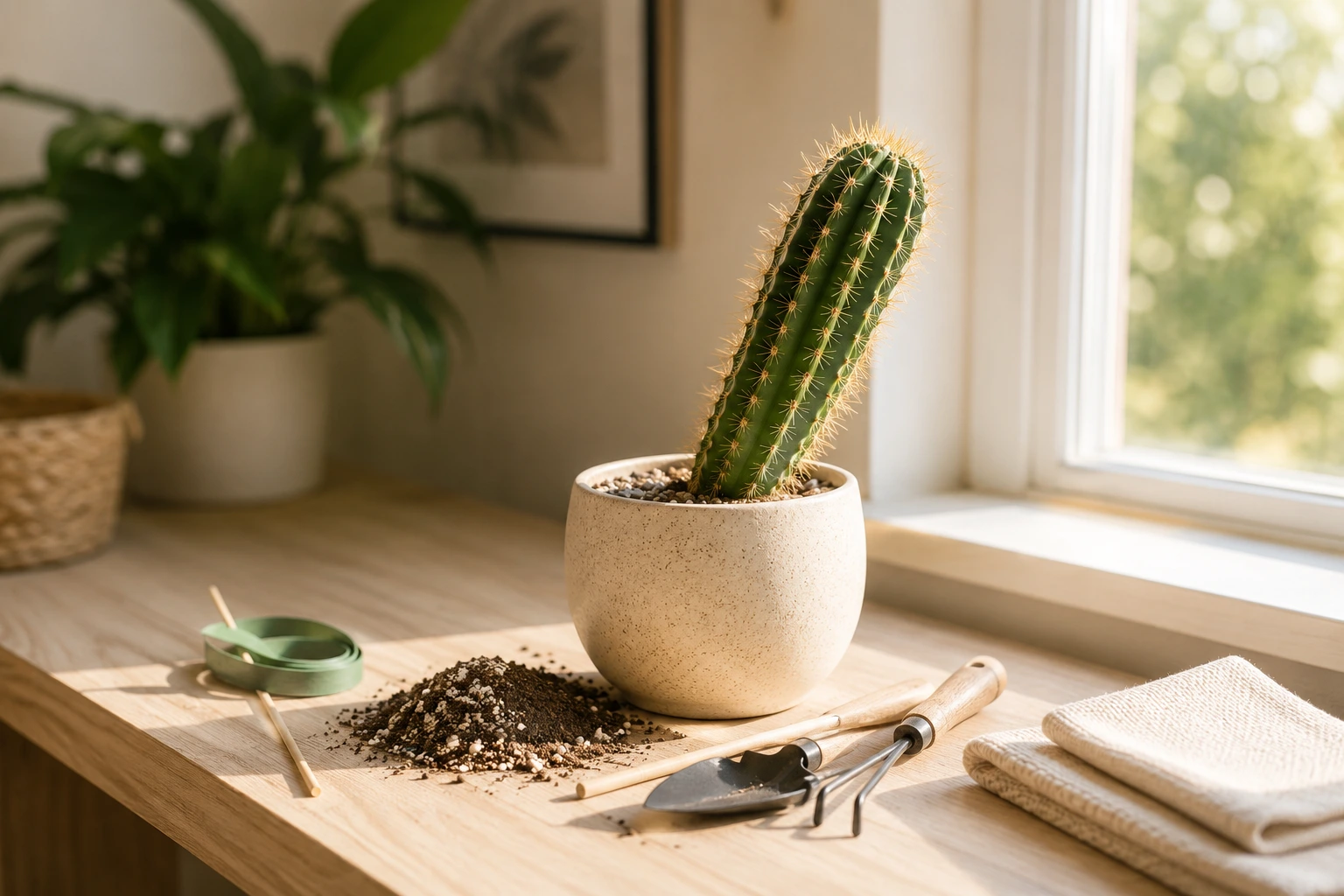
Learn why your cactus is turning yellow, including overwatering, sunlight problems, poor soil, root rot, pests, and simple ways to save your cactus.
Why Is My Cactus Turning Yellow?
If your cactus is turning yellow, do not panic. A yellow cactus is a common problem, especially for beginners who are still learning how to care for indoor cactus plants. In many cases, the plant can recover if you find the cause early and fix the care routine.
A cactus can turn yellow for different reasons. The most common causes are overwatering, poor drainage, lack of sunlight, too much direct sunlight, bad soil, root rot, pests, or temperature stress. Understanding the real reason is important because each problem needs a different solution.
1. Too Much Water
The most common reason a cactus turns yellow is overwatering. Cactus plants are made to survive in dry places, so they do not need water every day. When the soil stays wet for too long, the roots can become weak and damaged.
If your cactus is yellow and soft, overwatering is probably the problem. The plant may also look mushy or swollen. This happens because the cactus is holding too much water inside its stem.
How to Fix It
Stop watering the cactus immediately. Check the soil with your finger. If it feels wet, let it dry completely before watering again. Make sure the pot has drainage holes so extra water can escape.
2. Poor Drainage
Even if you water your cactus only sometimes, poor drainage can still make it turn yellow. If the pot does not have holes at the bottom, water stays inside the pot and damages the roots.
Heavy soil can also hold too much moisture. Normal garden soil is usually not good for cactus plants because it does not dry fast enough.
How to Fix It
Use a cactus soil mix that drains quickly. You can also add perlite, pumice, coarse sand, or small stones to help the soil dry faster. Always choose a pot with drainage holes.
3. Not Enough Sunlight
Cactus plants need bright light to stay healthy. If your cactus is in a dark room or far from a window, it may start turning pale green or yellow. It may also grow tall and thin because it is stretching toward the light.
How to Fix It
Move your cactus to a brighter place, such as a sunny windowsill. A window with bright natural light is usually a good choice. Do not move the cactus suddenly from shade to strong sun. Move it slowly so it can adjust.
4. Too Much Direct Sunlight
Cactus plants love light, but too much strong direct sunlight can burn them, especially if they were kept indoors or in shade before. Sunburn can appear as yellow, brown, or dry patches on the cactus.
How to Fix It
If your cactus has sunburn, move it slightly away from the window or use a thin curtain to reduce strong sunlight. Bright indirect light is better for many indoor cactus plants.
5. Root Rot
Root rot is a serious cactus problem. It usually happens when the cactus gets too much water or stays in wet soil for a long time. When the roots rot, the cactus cannot absorb water and nutrients properly, so it begins to turn yellow.
Signs of root rot include yellow color, soft stems, black spots, mushy areas, and bad smell from the soil.
How to Fix It
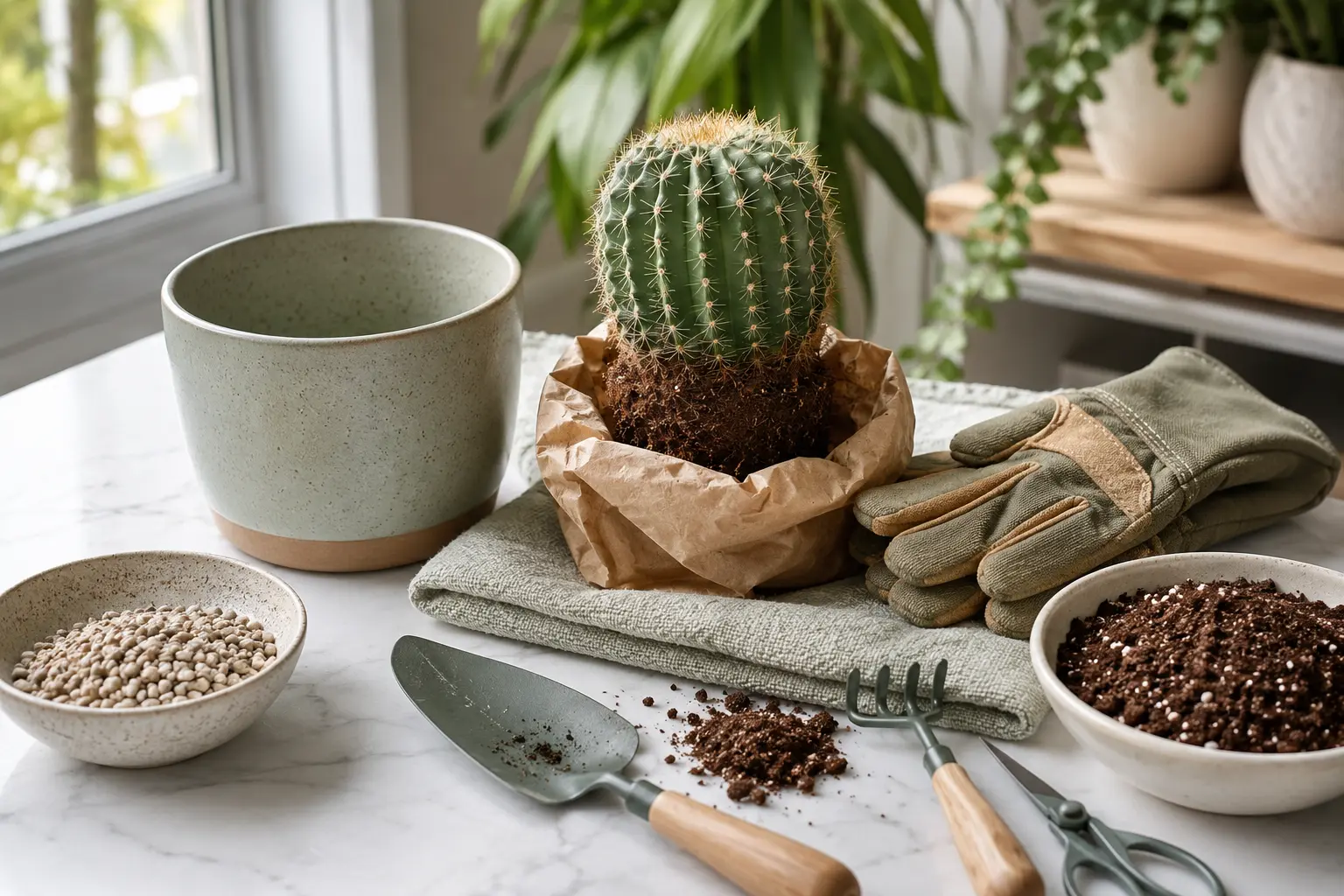
Remove the cactus carefully from the pot and check the roots. Healthy roots are firm and light-colored. Rotten roots are usually black, brown, soft, or slimy. Cut off the damaged roots with clean scissors and repot the cactus in fresh dry cactus soil.
6. Bad Soil
Cactus plants need light, dry, and fast-draining soil. If the soil is too heavy or compact, it keeps water around the roots for too long. This can make the cactus weak and yellow.
How to Fix It
Repot your cactus with a proper cactus soil mix. Avoid normal garden soil. A good cactus mix should dry quickly and allow air to reach the roots.
7. Temperature Stress
Cactus plants like warm and stable indoor temperatures. If your cactus is near a cold window, air conditioner, heater, or cold draft, it may become stressed and start turning yellow.
How to Fix It
Keep your cactus in a stable place with bright light. Avoid placing it near cold windows during winter or too close to heaters. Sudden temperature changes can damage the plant.
8. Pests
Pests can also cause yellow spots or weak growth. Common cactus pests include mealybugs, spider mites, and scale insects. These pests feed on the cactus and slowly damage it.
Look closely at your cactus. If you see white cotton-like spots, tiny insects, sticky areas, or brown bumps, pests may be the reason.
How to Fix It
Separate the affected cactus from other plants. Remove visible pests with a cotton swab dipped in rubbing alcohol. You can also use a plant-safe insecticidal soap if the problem is bigger.
Can a Yellow Cactus Become Green Again?
A yellow cactus can sometimes recover if the damage is not too serious. If the cactus is still firm and the roots are healthy, improving the care routine can help the plant become stronger again.
However, if the yellow part is soft, black, or mushy, that area may not recover. In this case, you need to act quickly to stop the damage from spreading.
Simple Checklist to Save a Yellow Cactus
- Check if the soil is wet or dry.
- Stop watering if the soil is still moist.
- Make sure the pot has drainage holes.
- Use fast-draining cactus soil.
- Move the cactus to bright natural light.
- Protect it from very strong direct sunlight.
- Check the roots if the cactus feels soft.
- Look for pests on the cactus surface.
Final Thoughts
A cactus turning yellow is usually a sign that something is wrong with its care. The most common reason is too much water, but sunlight, soil, drainage, pests, and temperature can also cause yellowing.
The best thing to do is check the soil first. If it is wet, stop watering and let it dry. Then make sure your cactus has bright light, good drainage, and the right soil. With the right care, many yellow cactus plants can recover and continue growing beautifully indoors.