Learn why your cactus is leaning to one side, including low light, uneven growth, weak roots, overwatering, pot problems, and how to fix it safely.
Why Is My Cactus Leaning to One Side?
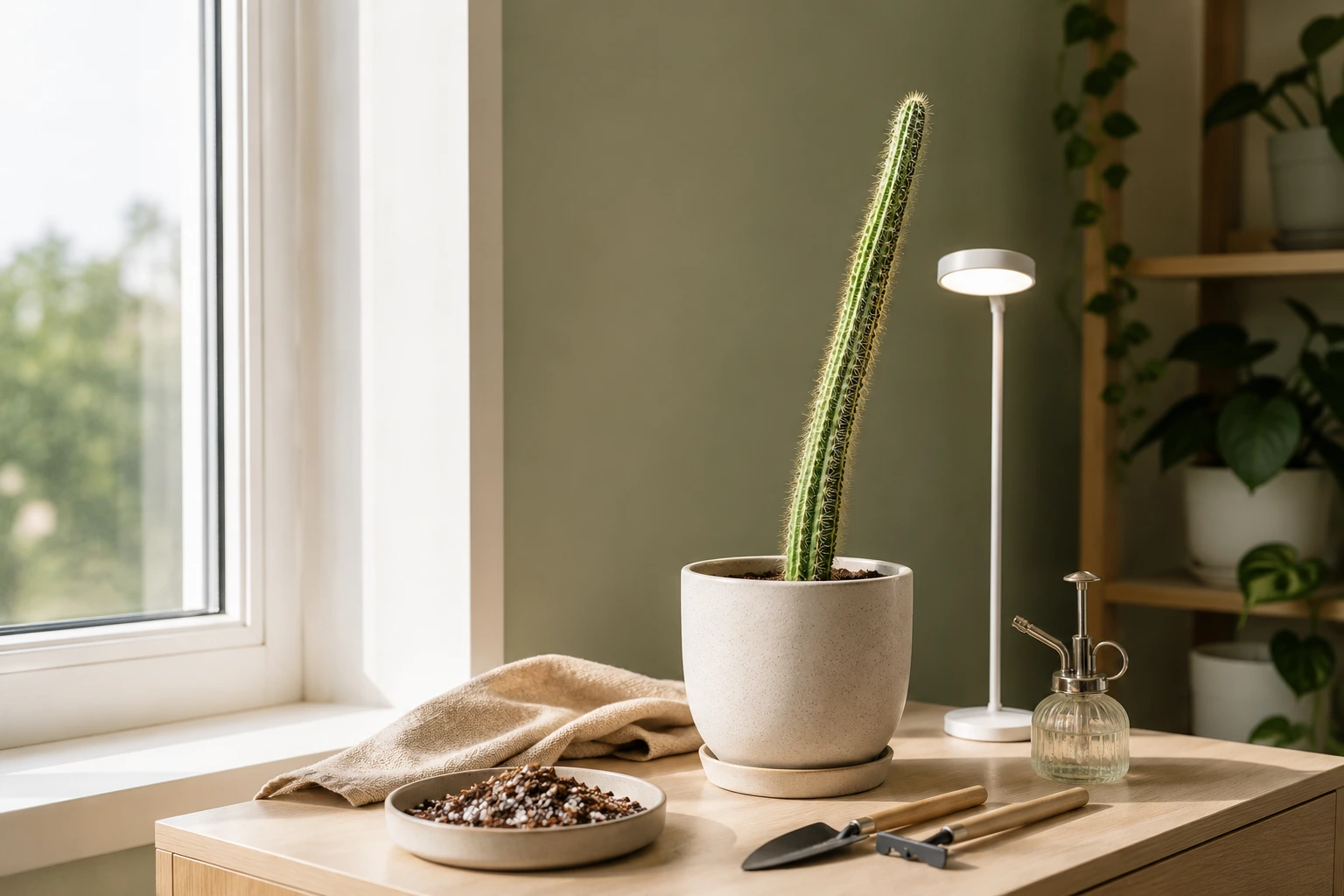
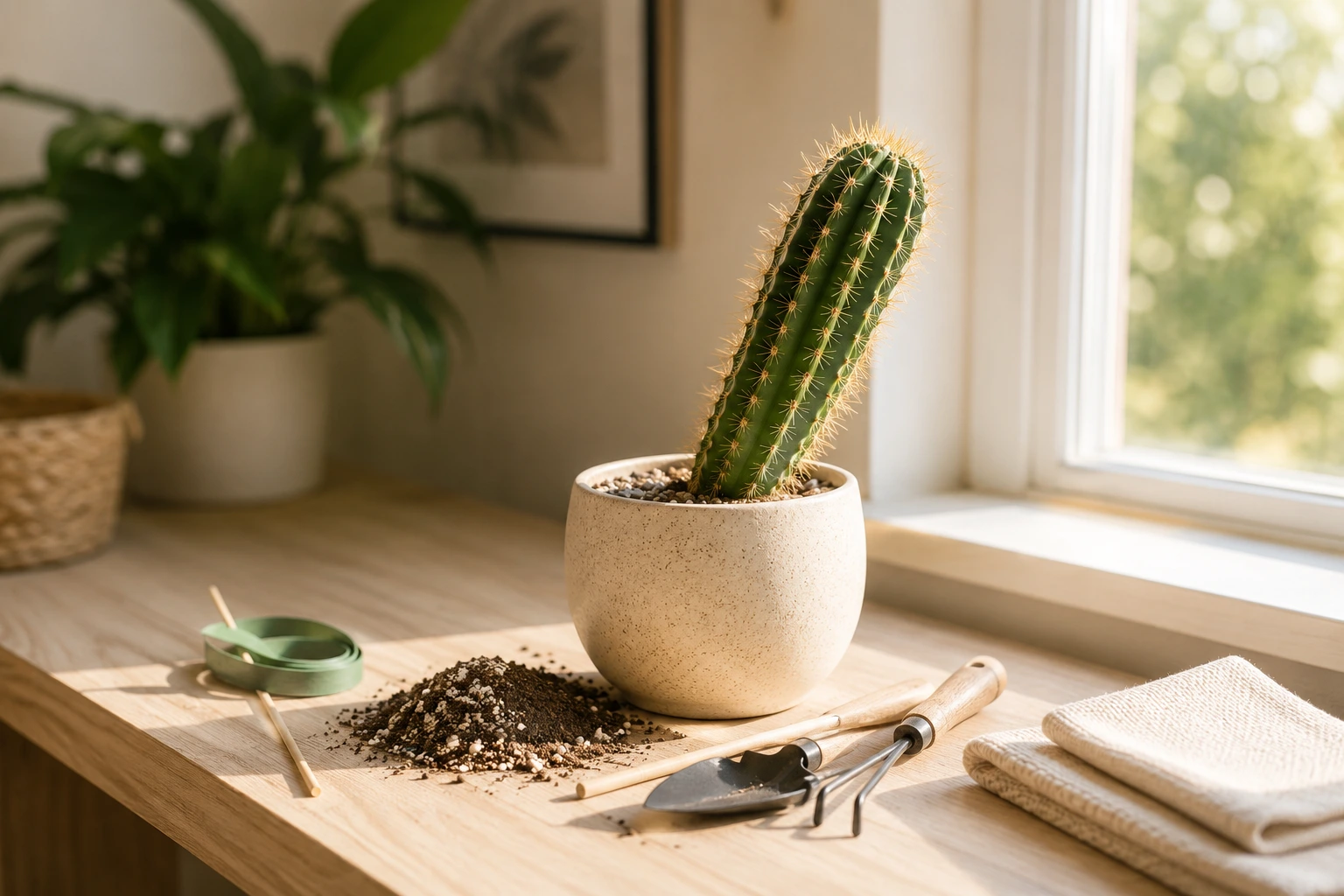
A cactus leaning to one side is a common problem for indoor plant owners. Sometimes the cactus leans because it is reaching toward light, but other times it can be a sign of weak roots, poor soil, overwatering, or an unstable pot. The good news is that most leaning cactus problems can be fixed when you understand the cause early.
A healthy cactus should usually grow upright and feel stable in its pot. If your cactus is bending, tilting, or leaning strongly in one direction, it is important to check its light, soil, roots, and pot setup before the problem gets worse.
Quick answer: A cactus usually leans to one side because of low light, uneven sunlight, weak roots, overwatering, a pot that is too small, or soil that does not support the plant well.
1. Not Enough Light
The most common reason a cactus leans to one side is not enough light. Cactus plants need bright natural light to grow strong and straight. If your cactus is placed far from a window or in a dark room, it may begin leaning toward the nearest light source.
This is especially common indoors because light usually comes from one direction, such as a window. Over time, the cactus may stretch, bend, or grow unevenly as it searches for more sunlight.
2. Uneven Sunlight
Even if your cactus is near a window, it may still lean if the light reaches only one side of the plant. The side facing the window may grow more strongly, while the other side receives less light. This can slowly pull the cactus in one direction.
To help your cactus grow evenly, rotate the pot every one or two weeks. This allows all sides of the cactus to receive light and helps prevent one-sided growth.
3. Overwatering and Weak Roots
Overwatering can also cause a cactus to lean. When soil stays wet for too long, cactus roots can become weak or rotten. Weak roots cannot hold the cactus firmly in place, so the plant may start leaning or wobbling.
If your cactus is leaning and the soil feels wet, check for other warning signs like yellowing, soft areas, mushy stems, or a bad smell from the soil. These signs may mean root rot is starting.
4. Poor Soil Support
Cactus plants need soil that drains well but still supports the roots. If the soil is too loose, old, compacted, or broken down, the cactus may not stay upright. This can happen after years in the same pot or after watering washes soil away from the base.
A good cactus soil mix should be gritty, fast-draining, and stable. Adding small gravel or pumice can help improve structure and drainage while keeping the plant supported.
5. Pot Is Too Small or Too Light
A cactus can lean if the pot is too small, too light, or not balanced. As cactus plants grow taller or heavier, they may become top-heavy. A small plastic pot may not provide enough weight or support.
If your cactus keeps tipping or leaning, choose a slightly larger and heavier pot with drainage holes. Terracotta and ceramic pots are often helpful because they are heavier and more stable than thin plastic pots.
6. Natural Growth Habit
Some cactus plants naturally grow in unusual shapes. Not every cactus grows perfectly straight. Certain varieties may curve, branch, or lean slightly as they mature. A small amount of leaning is not always a serious problem if the cactus is firm, healthy, and well-rooted.
However, if the leaning is sudden, getting worse, or combined with soft tissue, yellowing, or wet soil, you should check the plant carefully.
7. Damage or Weak Stem
A cactus may lean if the stem has been damaged. This can happen from being bumped, dropped, bent during repotting, or weakened by pests or rot. A damaged area may look wrinkled, brown, black, soft, or scarred.
If the cactus stem feels firm and the leaning is minor, the plant may continue growing normally. If the stem is soft or dark near the leaning area, rot may be present and should be treated quickly.
How to Fix a Leaning Cactus
The best fix depends on why the cactus is leaning. First, check the light. If your cactus is leaning toward a window, it likely needs more even sunlight. Move it to a brighter place and rotate it regularly.
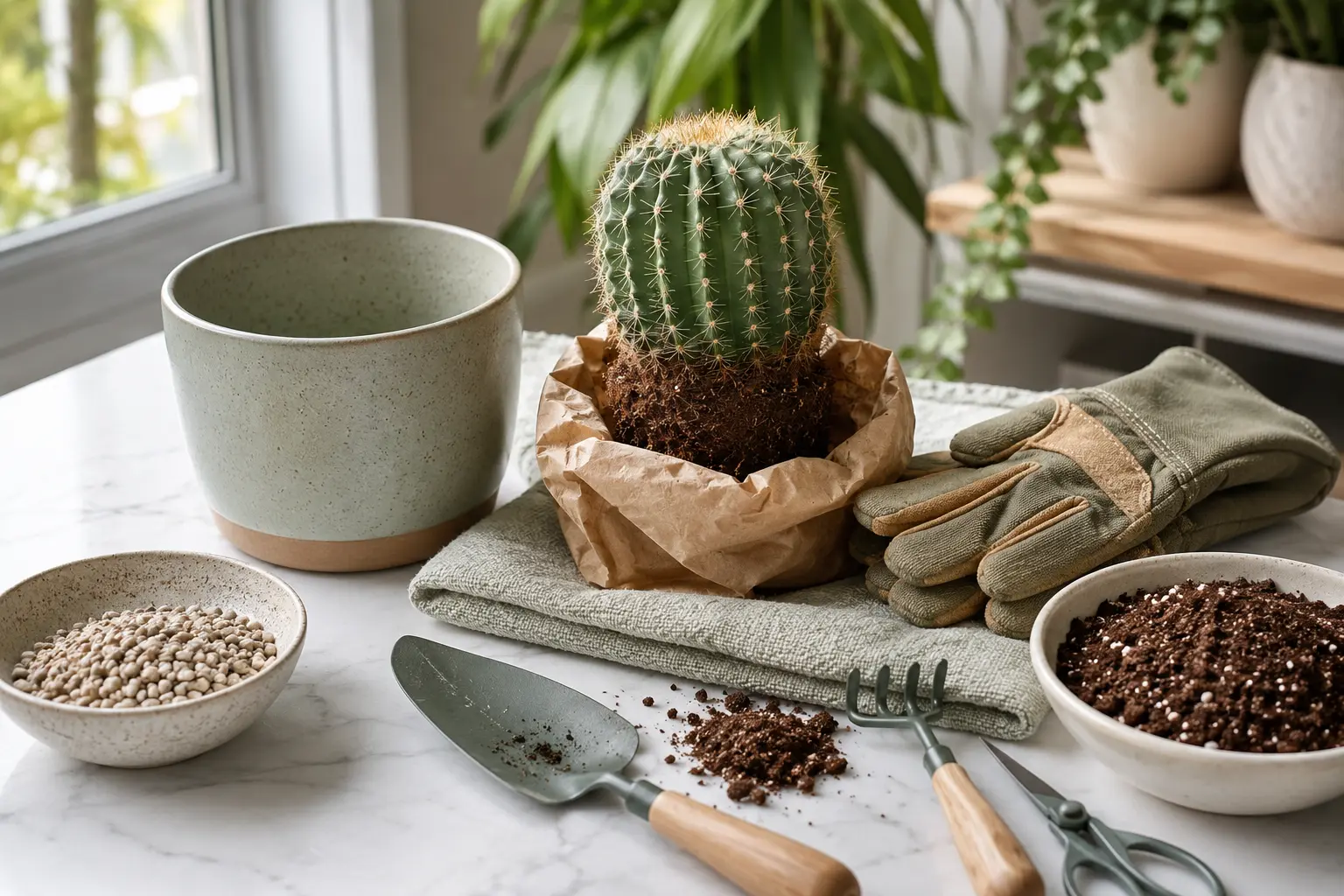
Next, check the soil and roots. If the soil is wet or the cactus feels loose, remove the plant carefully from the pot and inspect the roots. Healthy roots should be firm, while rotten roots may look brown, black, soft, or slimy.
Step-by-Step Rescue Plan
- Move the cactus to a brighter location with natural light.
- Rotate the pot every one or two weeks.
- Check if the soil is wet, compacted, or unstable.
- Inspect the roots if the cactus feels loose or soft.
- Remove rotten roots with clean scissors if needed.
- Repot in fresh fast-draining cactus soil.
- Use a heavier pot with drainage holes for better support.
- Add a temporary support stake only if necessary.
Should You Stake a Leaning Cactus?
You can use a support stake if your cactus is tall, heavy, or recovering after repotting. Use a soft tie and avoid tying the cactus too tightly. The goal is to support the plant gently, not force it into position.
Staking is usually a temporary solution. You should still fix the real cause, such as poor light, weak roots, or unstable soil. Once the cactus becomes stronger, you may be able to remove the support.
How to Prevent Cactus Leaning in the Future
- Place your cactus near bright natural light.
- Rotate the plant regularly for even growth.
- Use fast-draining cactus soil.
- Choose a stable pot with drainage holes.
- Avoid overwatering and wet soil.
- Repot when the cactus becomes too large for its pot.
- Keep the cactus away from places where it can be bumped.
When Should You Worry?
A slight lean is not always dangerous. You should worry if the cactus suddenly leans, feels soft, becomes yellow or brown, has a mushy base, smells bad, or feels loose in wet soil. These signs may point to root rot or serious stress.
If the cactus is firm, green, and only leaning slowly toward the window, the problem is probably light-related and easier to fix.
Final Thoughts
A cactus leaning to one side is usually caused by low light, uneven sunlight, weak roots, overwatering, poor soil support, or an unstable pot. Start by checking the light and rotating the plant regularly.
If the cactus feels loose, soft, or the soil stays wet, check the roots and repot it in fresh fast-draining cactus soil. With better light, proper watering, and a stable pot, your cactus can grow stronger and stay upright again.