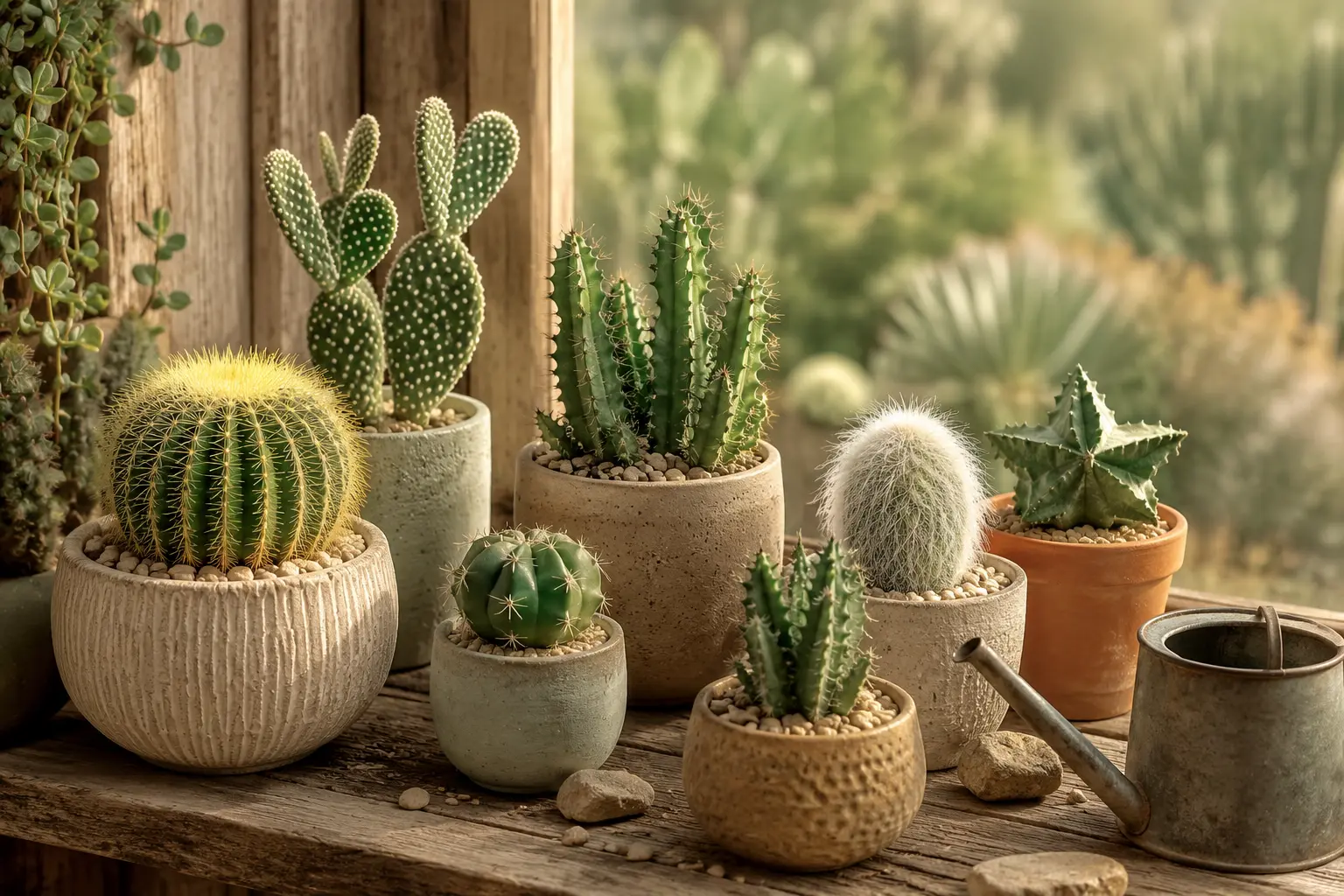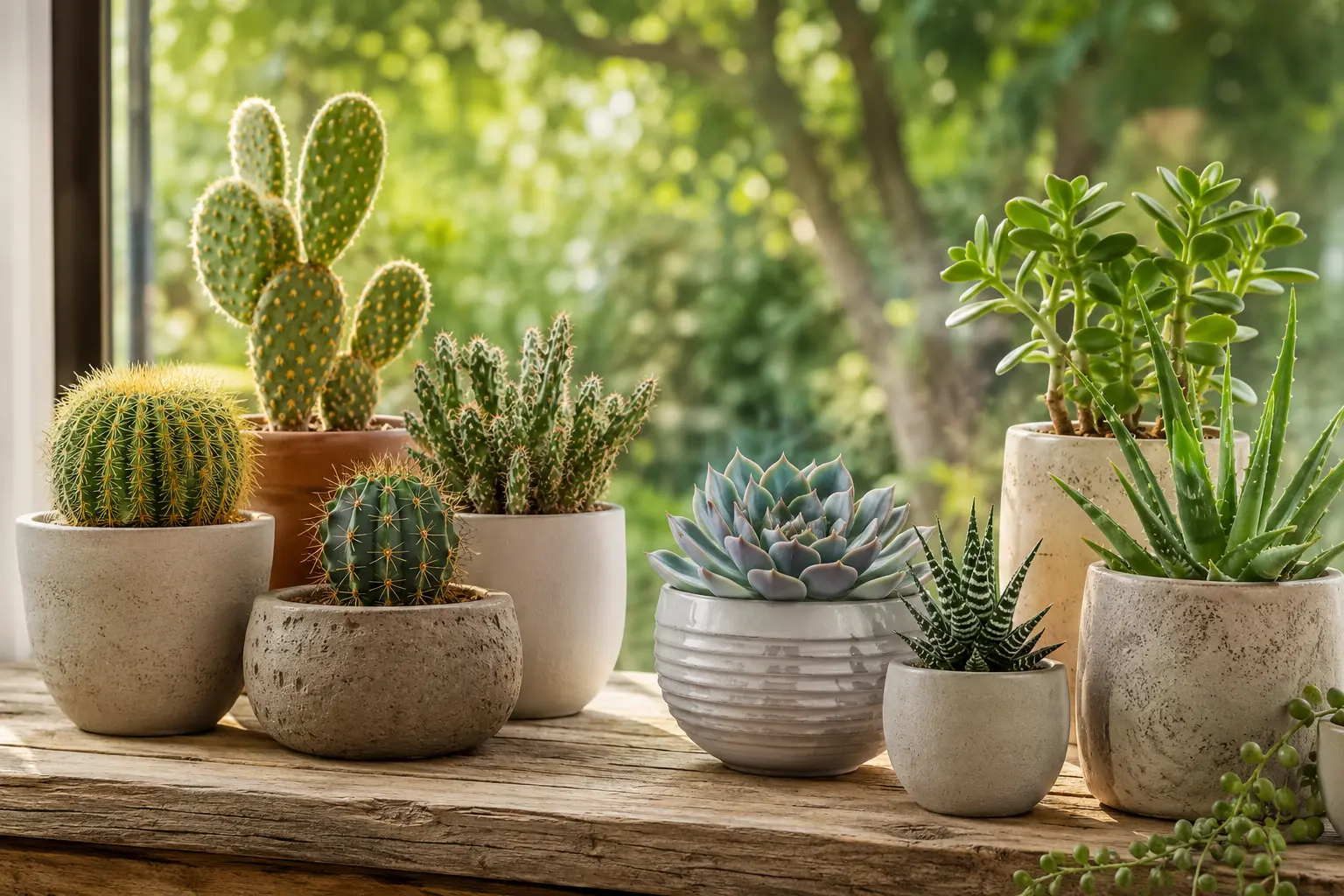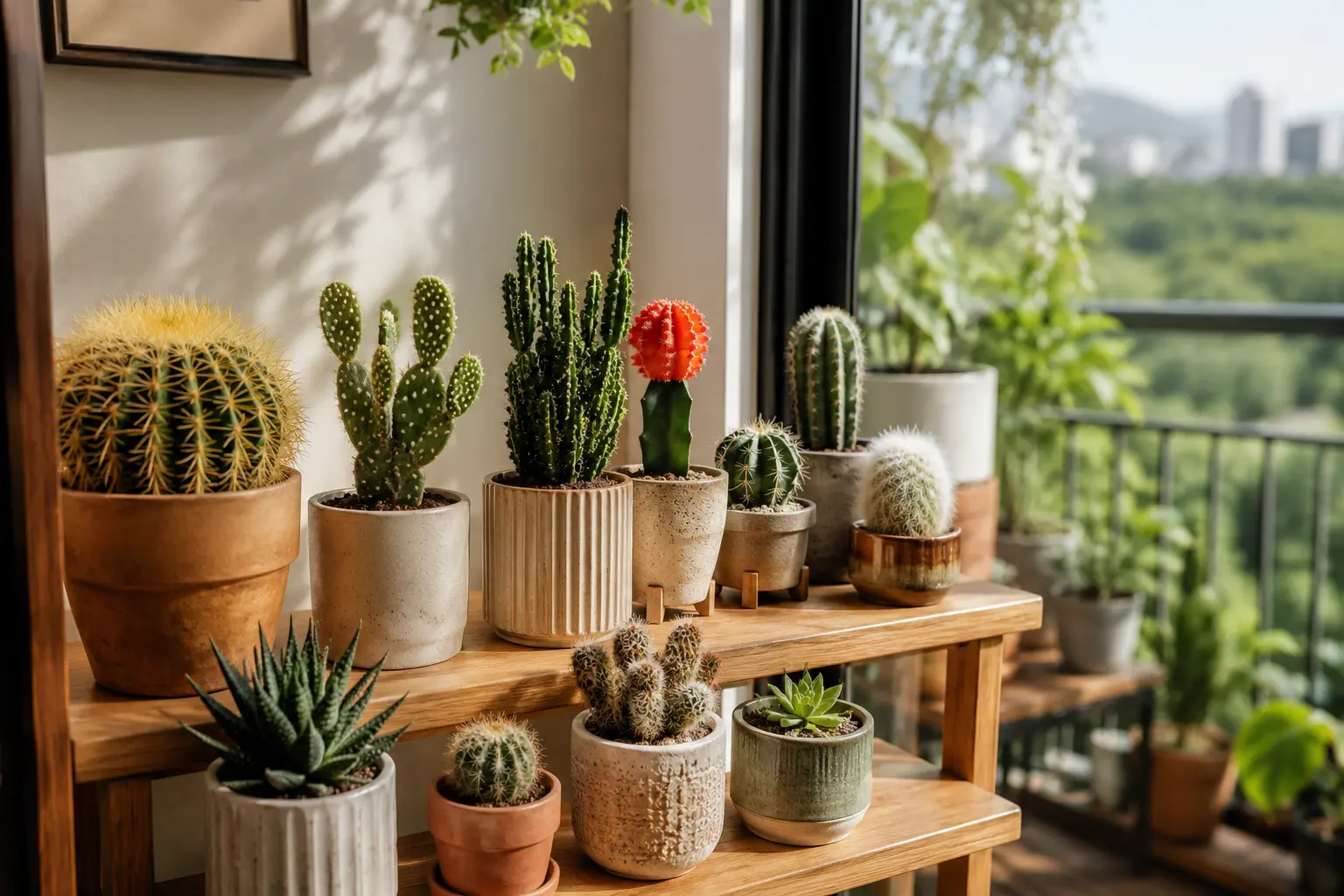
Learn how to care for cactus plants in winter, including watering, sunlight, temperature, soil, dormancy, and common winter cactus care mistakes.
Cactus Care in Winter: Complete Guide
Winter cactus care is different from summer cactus care. During the cold months, most cactus plants grow more slowly and need less water. Many beginners continue watering their cactus the same way all year, but this can cause problems like root rot, yellowing, soft stems, and weak growth.
The good news is that cactus care in winter is simple when you understand what the plant needs. With less watering, enough light, stable temperature, and good drainage, your cactus can stay healthy through winter and be ready to grow again in spring.
Do Cactus Plants Grow in Winter?
Many cactus plants enter a slow-growth period during winter. This is often called dormancy. During this time, the plant uses less energy and does not need as much water or fertilizer as it does during spring and summer.
Dormancy is normal and healthy for many cactus plants. If your cactus grows very slowly in winter, it does not always mean something is wrong. It may simply be resting until warmer and brighter days return.
Beginner tip: In winter, cactus plants usually need less water, no heavy feeding, and the brightest natural light you can provide indoors.
How Often Should You Water a Cactus in Winter?
In winter, most indoor cactus plants need much less water than in summer. A common beginner-friendly rule is to water only when the soil is completely dry. For many indoor cactus plants, this may mean watering once every four to six weeks.
However, there is no perfect schedule for every cactus. The right timing depends on the temperature, pot size, soil mix, humidity, and amount of light. If your room is cool and the soil dries slowly, your cactus may need even less water.
Check the Soil Before Watering
Before watering your cactus in winter, always check the soil first. Put your finger one or two inches into the soil. If the soil feels dry, you can water lightly. If it feels moist, wait longer.
You can also use a wooden stick. Push it into the soil and pull it out. If the stick comes out with wet soil on it, the cactus does not need water yet. This simple check helps prevent overwatering during winter.
Give Your Cactus Enough Light
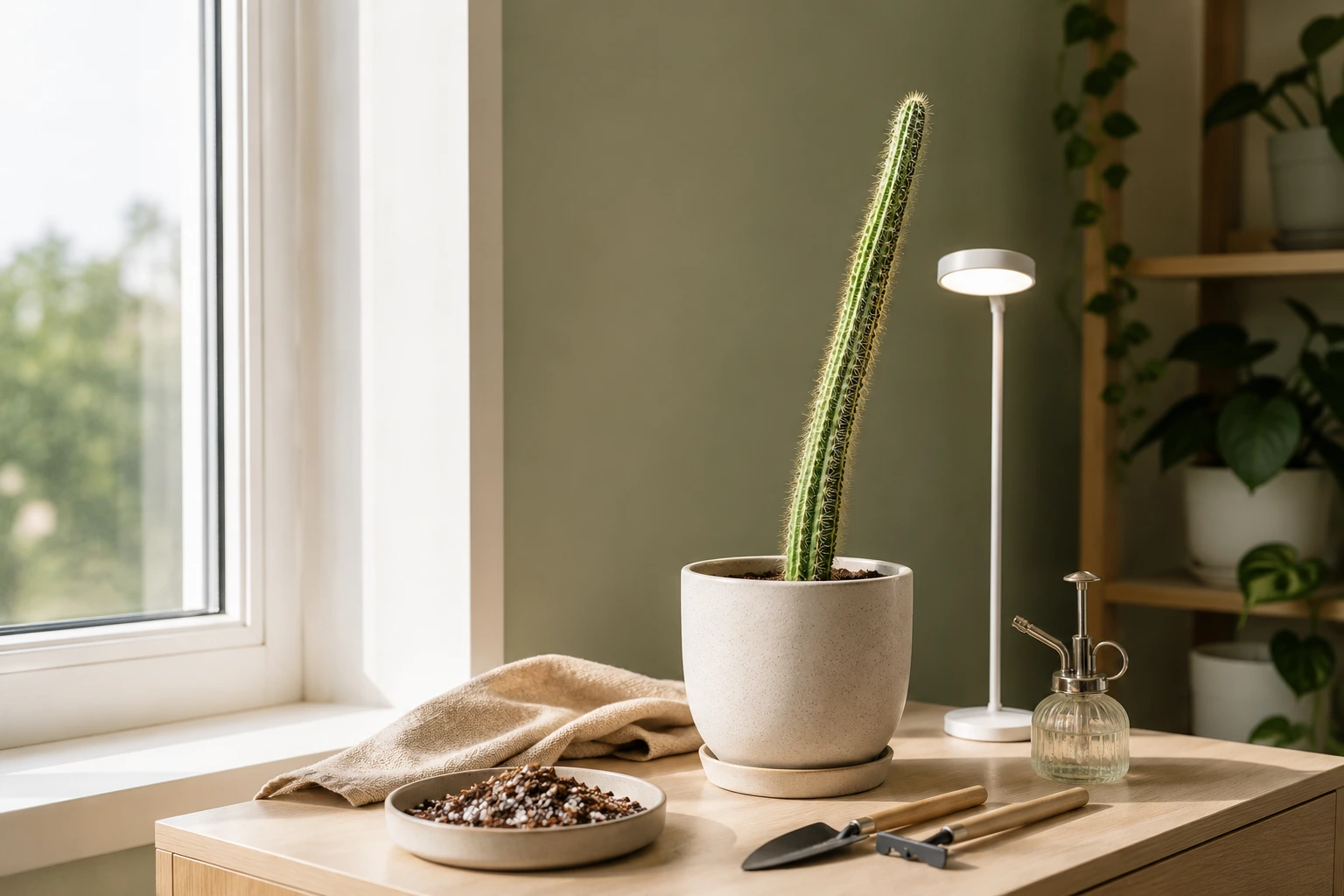
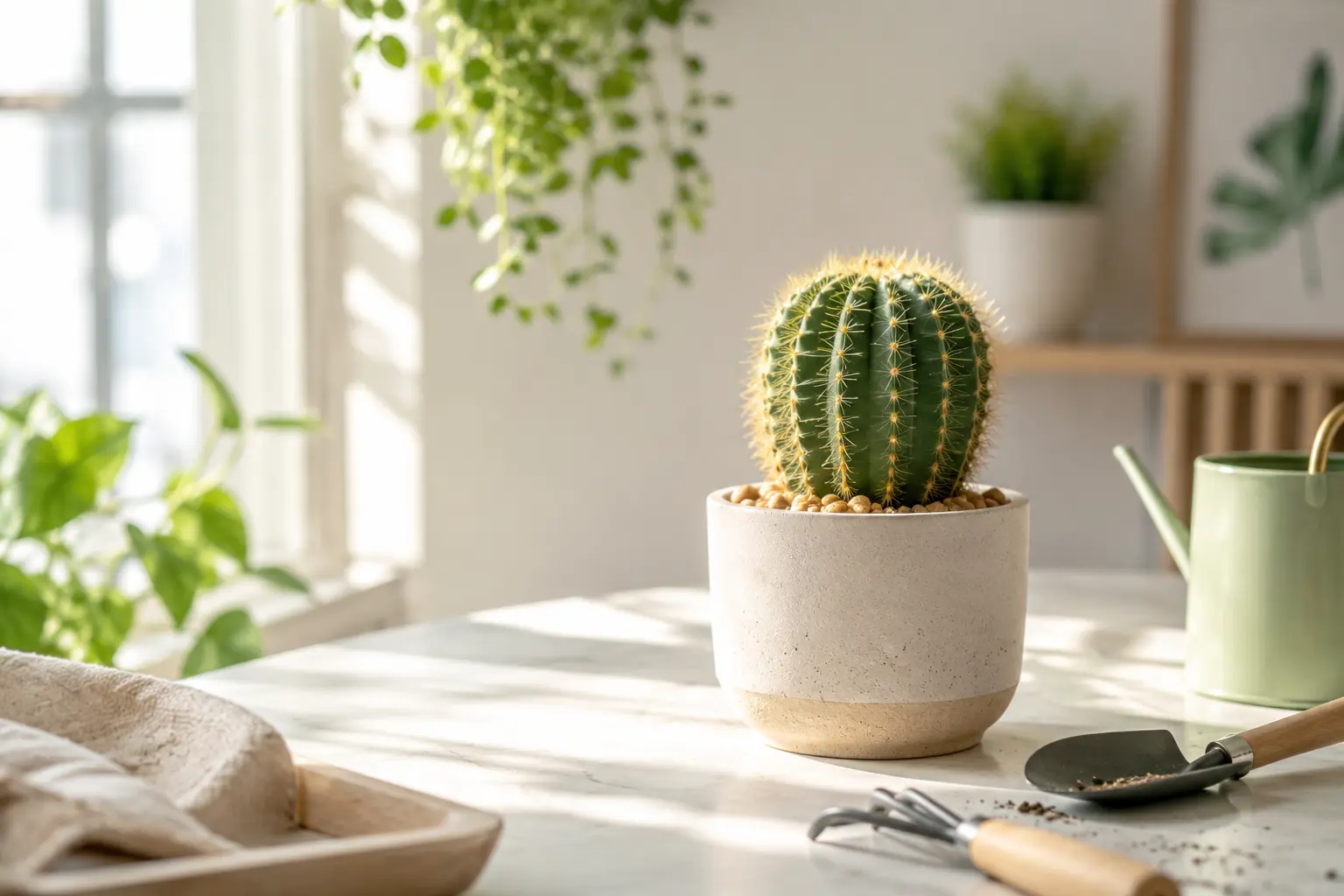
Winter days are shorter, and indoor rooms can become darker. Your cactus still needs bright light, even if it is growing slowly. Place it near the brightest window in your home, such as a south-facing or east-facing window.
If your cactus does not get enough light, it may become pale, weak, or stretched. This stretched growth is a sign that the plant is searching for more light. If your home is very dark, you can use a grow light to support your cactus during winter.
Protect Cactus Plants from Cold Drafts
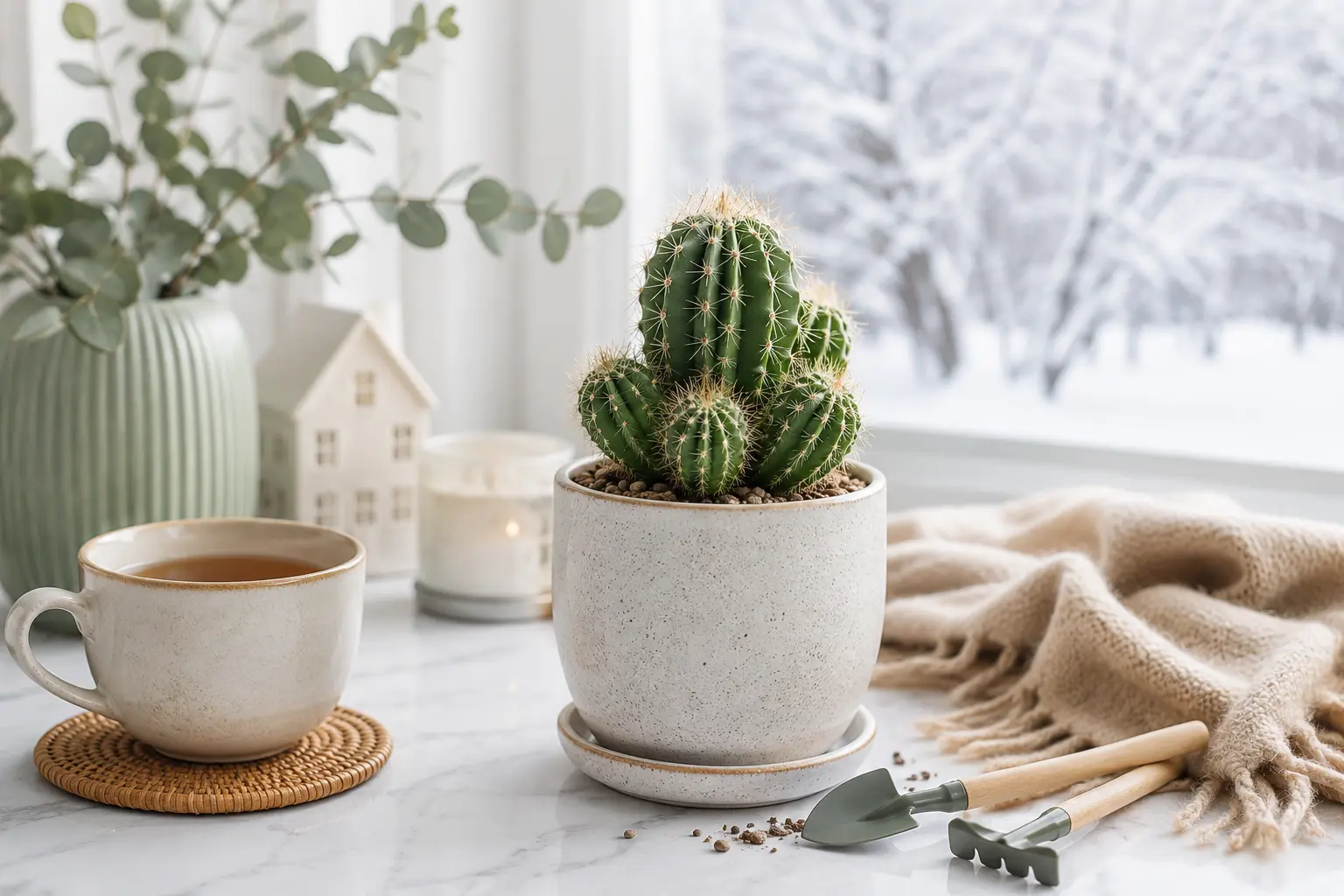
Cactus plants like stable conditions. Cold drafts from windows, doors, or air vents can stress the plant. During winter, avoid placing your cactus directly against very cold glass or near a door that opens often.
A bright window is good, but a freezing window is not. If the window area becomes very cold at night, move the cactus a little farther away while still keeping it in bright light.
Keep Cactus Away from Heaters
Heaters can also cause problems. Hot dry air from heaters, radiators, or fireplaces can stress a cactus and dry the plant unevenly. Sudden temperature changes between hot air and cold windows can also weaken the plant.
Keep your cactus away from direct heater airflow. A stable room temperature is usually better than a place with strong heat or cold drafts.
Should You Fertilize Cactus in Winter?
In most cases, you should not fertilize cactus plants during winter. Because the plant is growing slowly, it does not need much extra food. Fertilizing during dormancy can stress the plant or encourage weak growth.
It is better to fertilize cactus plants during spring and summer when they are actively growing. In winter, focus on light, dry soil, and stable temperature instead.
Use Fast-Draining Soil
Good soil is important all year, but it is especially important in winter. Since soil dries more slowly during colder months, a heavy soil mix can stay wet for too long and increase the risk of root rot.
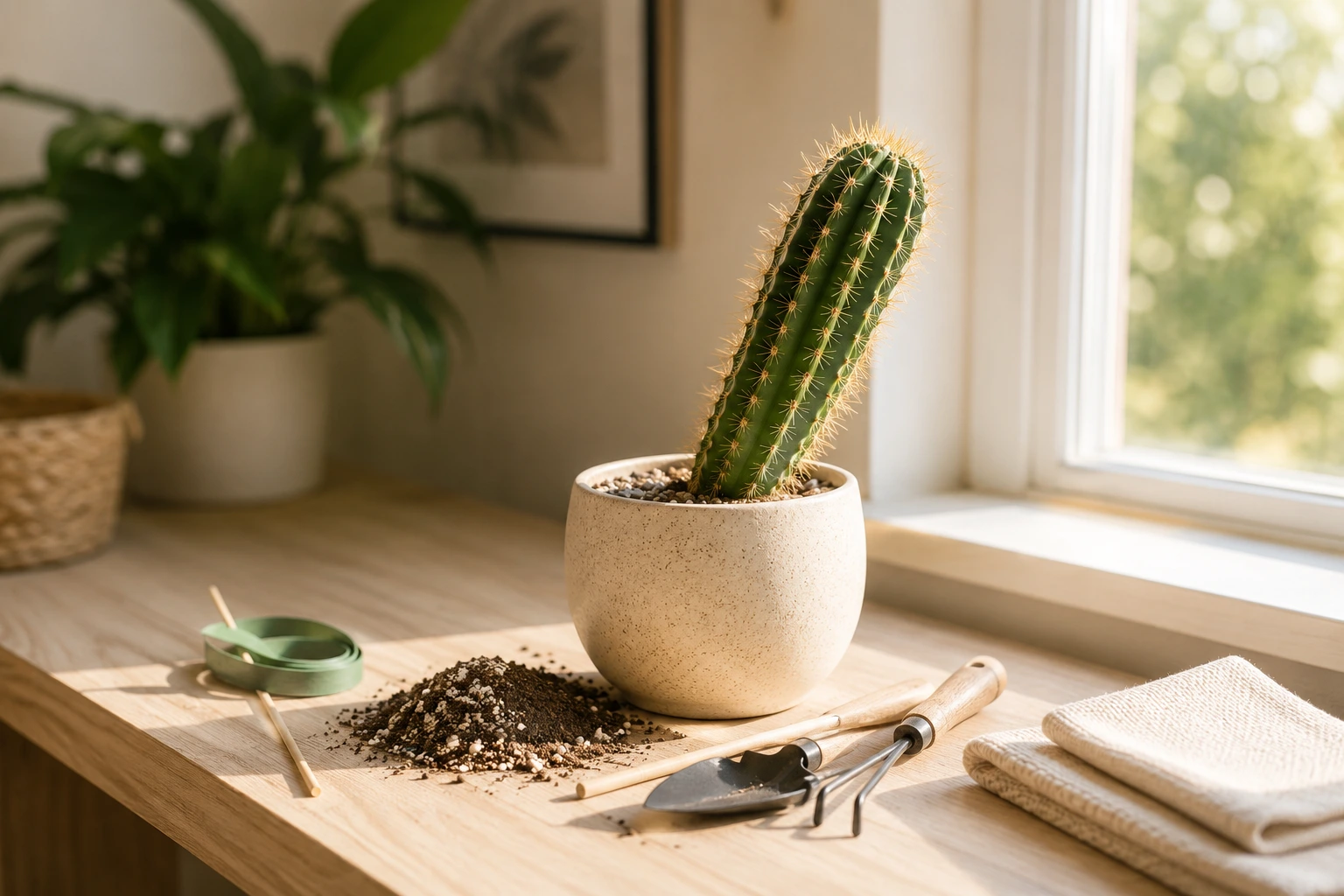
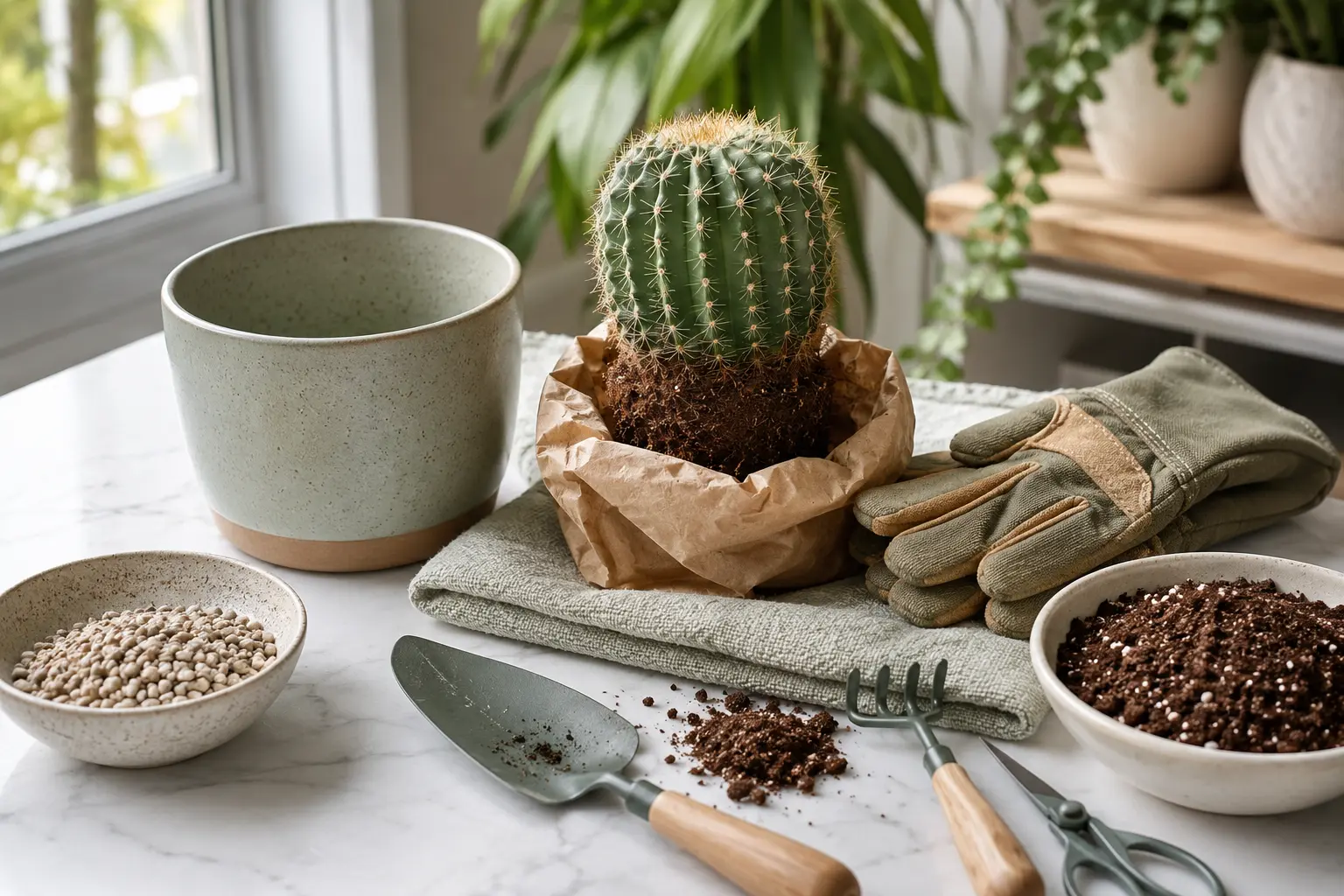
Use a cactus soil mix that drains quickly. You can improve drainage by adding perlite, pumice, coarse sand, or small gravel. The goal is to keep the roots from sitting in wet soil.
Choose a Pot with Drainage Holes
A pot with drainage holes is very important for cactus care in winter. Drainage holes allow extra water to leave the pot after watering. Without them, water can stay trapped at the bottom and damage the roots.
If your cactus is in a decorative pot without drainage holes, consider using it only as a cover pot. Keep the cactus in a smaller nursery pot with drainage holes, then place that pot inside the decorative container.
Common Winter Cactus Problems
Many cactus problems in winter happen because of too much water and not enough light. Since the plant uses less water during winter, wet soil can quickly become dangerous.
- Yellow cactus color from overwatering or low light.
- Soft or mushy stems caused by wet soil.
- Tall and thin growth from lack of sunlight.
- Brown or black spots from rot or cold damage.
- Slow growth, which can be normal in winter.
Should You Repot a Cactus in Winter?
It is usually better to avoid repotting cactus plants in winter unless there is a serious problem. Because the plant is growing slowly, it may take longer to recover from repotting.
However, if your cactus has root rot, very wet soil, or pests, repotting may be necessary. In that case, remove the old soil, cut away damaged roots, let the plant dry, and repot it in fresh dry cactus soil.
Winter Cactus Care Checklist
- Place your cactus near the brightest window.
- Water only when the soil is completely dry.
- Reduce watering compared to summer.
- Avoid fertilizing during winter dormancy.
- Keep the cactus away from cold drafts.
- Keep it away from strong heater airflow.
- Use fast-draining cactus soil.
- Use a pot with drainage holes.
Final Thoughts
Cactus care in winter is mostly about doing less. Water less often, avoid fertilizer, and keep your cactus in bright natural light. Because the plant grows more slowly in winter, it does not need the same care routine as it does in summer.
To keep your cactus healthy through winter, use fast-draining soil, a pot with drainage holes, stable indoor temperature, and plenty of light. With the right winter care, your cactus can stay strong and be ready for fresh growth when spring arrives.