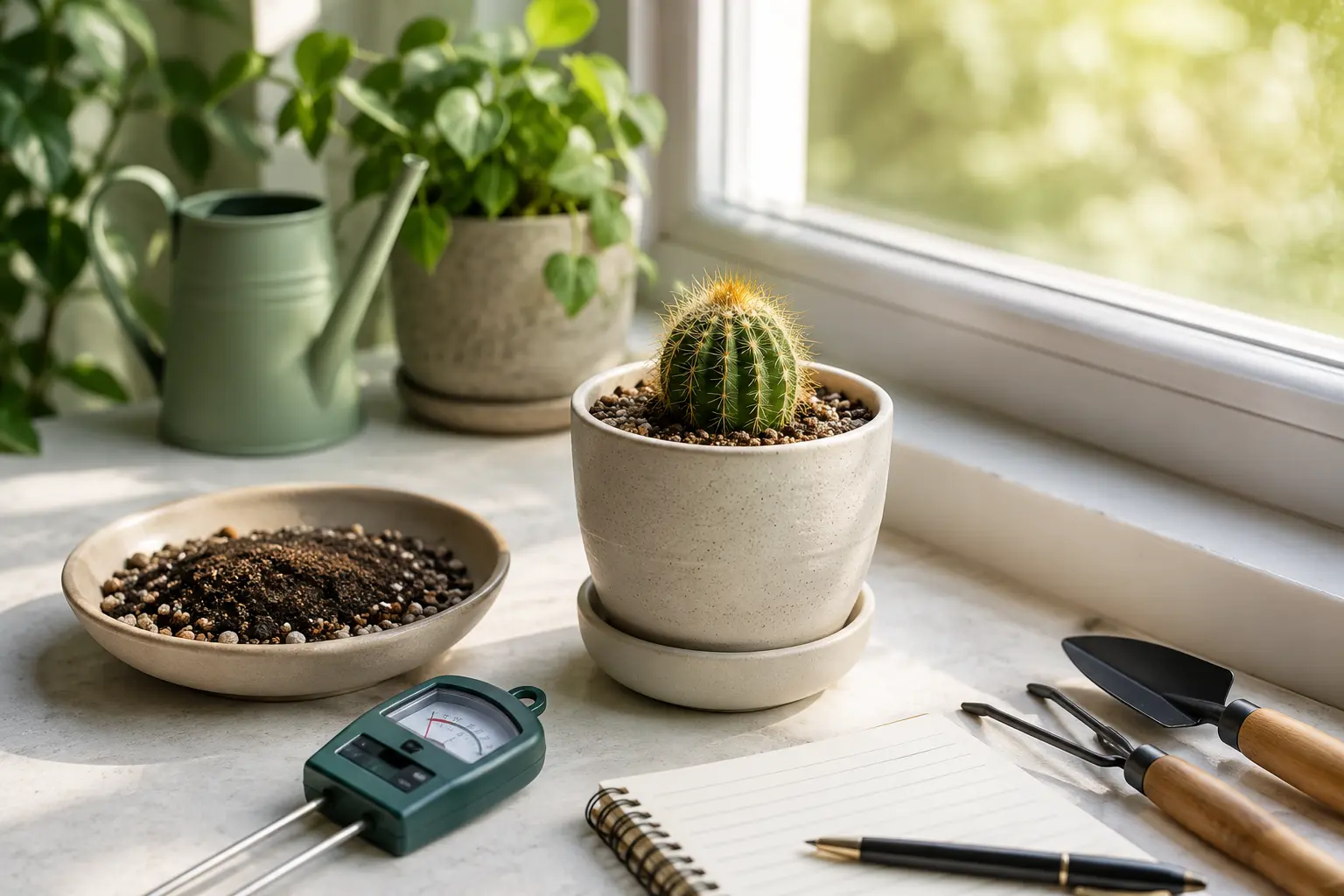
Learn the most common reasons why your cactus is not growing, including low light, wrong watering, poor soil, small pots, dormancy, and how to help it grow again.
Why Is My Cactus Not Growing?
If your cactus looks healthy but has stopped growing, don’t panic. Cacti are naturally slow-growing plants, and sometimes they pause their growth because of light, water, soil, temperature, or seasonal changes. The key is to understand whether your cactus is simply resting or if something in its care routine needs to change.
1. Your Cactus Is Not Getting Enough Light
One of the most common reasons a cactus stops growing is lack of sunlight. Most cacti need several hours of bright light every day. If your cactus is sitting far from a window or in a dark corner, it may survive, but it will not grow well.
Move your cactus closer to a bright window where it can receive strong indirect light or gentle direct morning sunlight. If your cactus starts stretching toward the light, becoming thin, or leaning to one side, that is a sign it needs more brightness.
2. The Soil Is Holding Too Much Moisture
Cacti do not like heavy, wet soil. If the soil stays damp for too long, the roots may become weak, and the plant may stop growing. Even if the cactus does not look rotten yet, poor soil can slow down its development.
Use a fast-draining cactus or succulent soil mix. A good cactus soil should feel light, gritty, and airy. Avoid regular garden soil or heavy potting soil because it can trap too much water around the roots.
3. You May Be Watering Too Often
Overwatering is another major reason a cactus may stop growing. Cacti store water in their stems, so they do not need frequent watering like many houseplants. If you water too often, the roots may struggle to breathe.
Let the soil dry completely before watering again. When you do water, give the plant a deep drink until water drains from the bottom of the pot. Then wait until the soil is fully dry before the next watering.
4. The Pot May Be Too Small or Too Large
A cactus can stop growing if its pot is not the right size. If the pot is too small, the roots may not have enough space. If the pot is too large, the soil may stay wet for too long, which can stress the plant.
Choose a pot that is only slightly bigger than the cactus root ball. Make sure the pot has drainage holes. Terracotta pots are a great option because they help the soil dry faster.
5. Your Cactus Might Be Dormant
Cacti often grow slowly or stop growing during colder months. This is called dormancy. During this rest period, your cactus may look the same for weeks or even months. This is normal, especially in winter.
During dormancy, reduce watering and avoid fertilizing. Growth usually returns when the weather becomes warmer and the plant receives more light.
6. It Needs Warmer Temperatures
Cacti prefer warm conditions during their growing season. If your cactus is near a cold window, air conditioner, or drafty area, it may stop growing because the temperature is too low.
Keep your cactus in a warm, bright place. Avoid sudden temperature changes, especially during winter nights.
7. Your Cactus May Need Nutrients
If your cactus has been in the same soil for a long time, the soil may no longer have enough nutrients. A lack of nutrients can slow growth, especially during spring and summer.
Use a cactus fertilizer during the active growing season. Apply it lightly and avoid fertilizing during winter dormancy. Too much fertilizer can harm the plant, so always use a gentle amount.
8. The Roots May Be Damaged
Sometimes the problem is hidden under the soil. Damaged roots, root rot, or compacted soil can stop a cactus from growing. If your cactus has not grown for a very long time and the soil stays wet, check the roots carefully.
Healthy cactus roots should look firm and light-colored. Rotten roots may look dark, soft, or smell bad. If you find root rot, remove the damaged roots, let the plant dry, and repot it in fresh dry cactus soil.
How to Help Your Cactus Grow Again
- Place it in brighter light.
- Use fast-draining cactus soil.
- Water only when the soil is completely dry.
- Make sure the pot has drainage holes.
- Keep it warm during the growing season.
- Fertilize lightly in spring and summer.
- Be patient because cacti grow slowly.
Final Thoughts
A cactus that is not growing is not always a sick cactus. Many cacti grow very slowly, and some stop growing naturally during colder months. However, if your cactus has poor light, wet soil, no drainage, or damaged roots, it may need better care before it starts growing again.
Give your cactus bright light, dry soil, careful watering, and patience. With the right conditions, your cactus can slowly return to healthy growth.